Fanny the all-female Filipina rock band with Sacramento roots everyone should hear about

From left: Fanny bassist Jean Millington, keyboardist Nickey Barclay, singer/drummer Brie Darling, lead guitarist June Millington and Richard Perry (Warner/Reprise record producer), as the band practices in the basement of their famed band home, “Fanny Hill,” in the Hollywood Hills, after being signed by Warner/Reprise for their first album in 1969. (Photo courtesy of Linda Wolf)

An all-female Filipina rock band almost lost to time is experiencing a warming resurgence through the documentary film “Fanny: The Right to Rock” directed by Bobbi Jo Hart. 

The film focuses on the enduring legacy of Fanny’s trailblazing career as they burst onto the Los Angeles music scene emerging from Sacramento with their groundbreaking sound and impeccable musicianship. Their raw talent heard across five critically acclaimed albums led the group to achieve Top 40 success with songs like “Charity Ball” and “Butter Boy” climbing the Billboard Hot 100 chart during the 1970s. 

The four-piece band caught the attention and respect of rock legends such as David Bowie and Def Leppard frontman Joe Elliott. Fanny often jammed with Bonnie Raitt and Joe Cocker at their legendary party pad, adoringly known as “Fanny Hill” in West Hollywood. In the film, singer and lead guitarist June Millington described it as a “sorority with electrical guitars.”

They’re a band that’s influenced groups like The Runaways and The Go-Go’s, and toured worldwide with Jethro Tull and Humble Pie. Yet, their story and their music didn’t receive the breakthrough success many, including Bowie, feel Fanny so rightly deserved. 

“People are always saying, ‘God, I wish I’d known who you were back then. I’m so pissed off that I didn’t discover you until I was 50 years old,’” said bassist Jean Millington, who is also June’s sister, from her home in Davis. “We get that comment over and over again, people saying they can’t believe they missed us.”

Now, a special screening of “Fanny: The Right to Rock,” co-presented by the Crocker Art Museum and California Humanities, is set for Thursday, Nov. 21, at 6:30 p.m. It’ll be followed by a Q&A with Hart, Jean and drummer Brie Darling.

“Sacramento is a very sacred space,” Hart said. “Jean and June, they went to McClatchy High School, and I really hope the people from the high school find out about this screening and encourage young people or teachers to come and see these two alumni.”

Discovering Fanny

Fanny lead guitarist June Millington. (Photo courtesy of Linda Wolf)

Like many fans who stumbled upon Fanny’s music decades after they disbanded, Hart said she unexpectedly found the rock band while scrolling through the Taylor Guitars website searching for a new instrument for her daughter. When she clicked on a tab that revealed a collection of stories about musicians who proudly play Taylor guitars, Hart was taken by what she saw. 

“As I was scrolling down, this photo scrolls up and it’s this woman wielding this electric guitar with this rock look on her face,” Hart said. “She’s rocking out and she has this flaming gray hair. It turns out, it was June Millington, the lead guitarist of Fanny.” 

Hart abandoned looking for guitars at that point. Inspired by June Millington’s story, she began researching as much as she could about Fanny. But, to her disappointment, she couldn’t find much.

“I serendipitously discovered them. I was equally excited and equally pissed off when I discovered the band. I was excited to discover this band I’d never heard of and it was groundbreaking,” Hart said. “These women, who are self-taught musicians, writing their own songs, playing their own instruments, starting a band — the first all-woman rock band to get signed by a major label. But I was pissed off, because, how did I miss them? How did I not know about them? How does everyone not know about this band?”

“Equally pissed off” and “excited” are two ingredients Hart says are crucial for her to get fired up about making a new film. Fanny ignited that flame. 

‘Music is our ticket to the world’

From left: Bassist Jean Millington, drummer Brie Darling and lead guitarist June Millington at the photo shoot for the album cover of their new album “Fanny Walked the Earth.” (Photo courtesy of Marita Madeloni)

June and Jean Millington’s Sacramento roots run deep.

In 1961, they immigrated from the Philippines with their parents during their seventh- and eighth-grade years. June described feeling culturally behind, like a “fish out of water,” so the sisters turned to ukuleles and guitars, two instruments that grounded them in their new surroundings.

“We learned songs on the radio, and then, eventually, we teamed up with two other girls. We were called Four Jays, all our names began with J,” Jean Millington said. “When I was in eighth grade and June was in ninth grade, we performed for a varsity show at the junior high, and for the first time, people stopped to talk to us. They knew who we were. They wanted to get to know us. So we thought, ‘My God, music is our ticket to the world.’”

From left: The self-founded band, the Svelts (pre-Fanny), in a home they shared and rehearsed in, in Los Altos Hills, California, in the 1960s: Jean Millington, Brie Darling, Wendy Haas Mull and June Millington. (Photo courtesy of Steve Griffith)

Once the sisters entered McClatchy High School, they formed a new band called the Svelts and their father even refurbished an old bus to help the girls tour comfortably. In the late-’60s, the musicians moved to L.A., gigging hard at various clubs and hitting open-mic nights at the Troubador under the name Wild Honey when they caught the interest of music producer Richard Perry. The driven group, known for playing Motown covers and letting their sheer musicianship dispel doubt about their ability to succeed in a male-dominated industry, signed to Reprise Records in 1969 as Fanny.

“We were so tight. You knew what the other person was doing, you didn’t have to think about it. You could count on the other person to come up with what we needed to make the music work,” Jean Millington said. “We were like a big ship where everyone was on the same course. That’s a wonderful thing. I want people to know just how excellent we were as a band. You have to really be a musician to play like we played — there’s no getting around that. We were excellent musicians.”
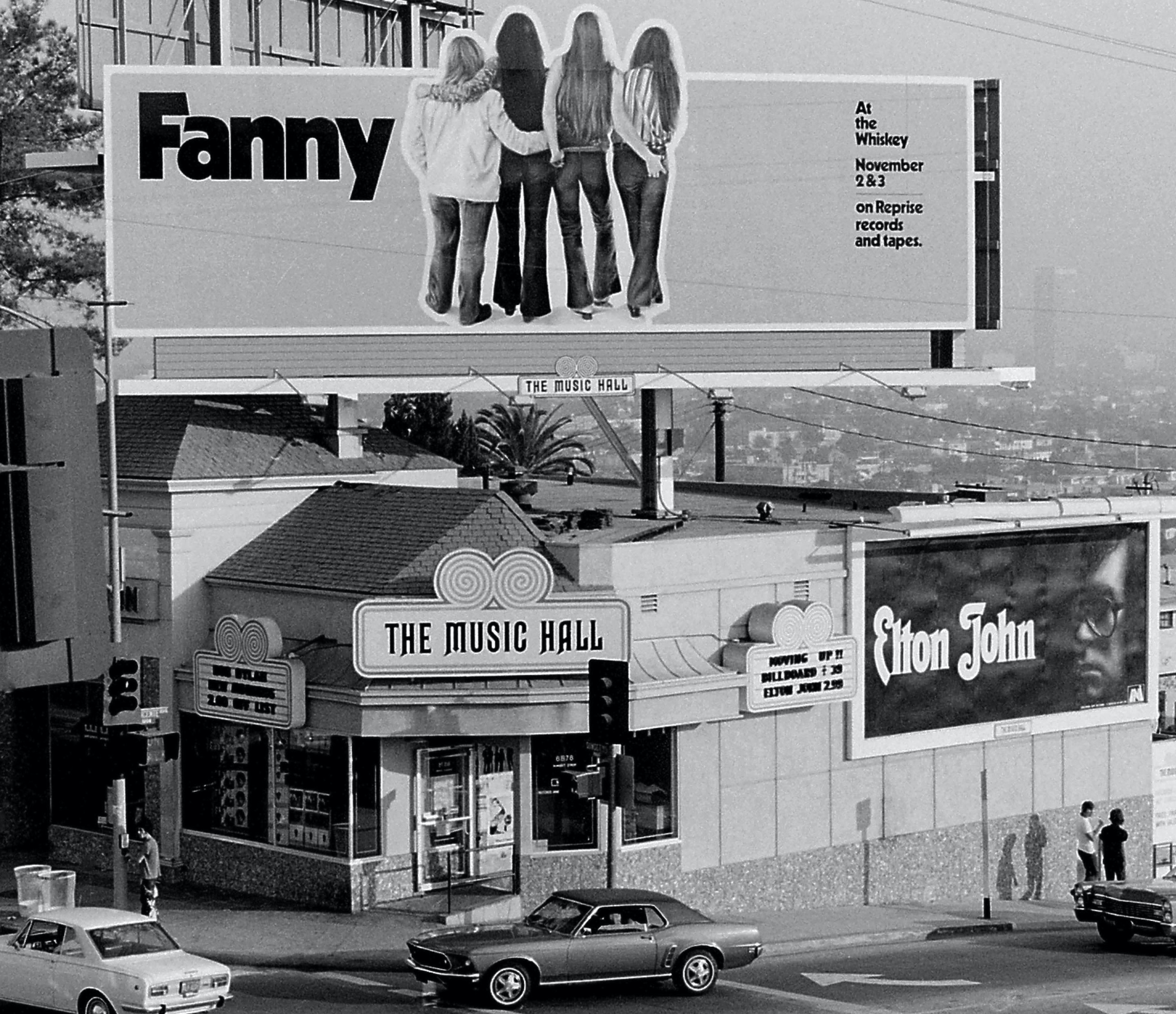
Fanny billboard on Sunset Boulevard in Hollywood promoting a concert at the Whiskey after the release of their first album in 1970. (Photo courtesy of Linda Wolf)

Fanny disbanded after their fifth album, “Rock and Roll Survivors,” released in 1974, but the musicians would reunite once again decades later. In 2016, original drummer Brie Darling joined the Millington sisters for a live performance, which reignited their bond and inspired the group to form a new band, Fanny Walked the Earth, which released a self-titled album in 2018. 

Hart’s film captures these tender moments between the women rehearsing as Fanny Walked the Earth, contextualized with interviews from everyone from Cherie Currie of The Runaways, to Gail Ann Dorsey — who played bass for Bowie and countless others — to Kate Pierson of the B-52’s and many more rock legends sharing their stories of how they discovered Fanny. 

“When Fanny got the new rock record deal, I felt like that was the perfect moment to follow the band. Follow them getting back together, making this new rock album, all of them being in their late 60s,” Hart said. “They deserve to be recognized now, including being in the Rock & Roll Hall of Fame.”

“Fanny: The Right to Rock” premiered in Canada in 2021. Two years later, Fanny performed live together at Yerba Buena Gardens in San Francisco during CAAMFest, the world’s largest film festival that highlights Asian American and Asian film, food and music. 

With the film’s upcoming screening at the Crocker, Jean Millington says she hopes it inspires new generations to follow their dreams, challenge the current norm and write their own story.

“Discover the music. That’s what I would say. We were really a band. It was the four of us together. It was not made up, it was not put together by anybody. It was real organic,” Jean Millington said. “What we did and what came out was really quite phenomenal. Not that many bands can say the same thing, even back then, there were a lot of really great bands, but I think we were really unique.”

See “Fanny: The Right to Rock” at the Crocker Art Museum, 216 O St., on Thursday, Nov. 21 at 6:30 p.m.; $8-$16. For tickets, visit crockerart.org.
A Double-Edged Service

Third-party delivery services help—and hinder—restaurants during COVID-19

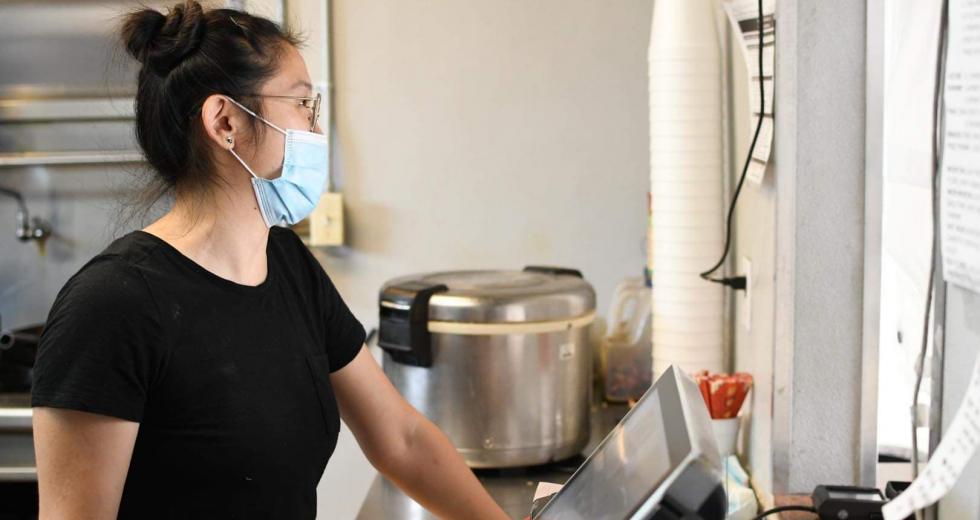
Diana Dich, whose family owns Happy Takeout in Sacramento, says some delivery service drivers keep the food for themselves. Photo courtesy of Diana Dich

By Steph Rodriguez

Restaurateur Derar Zawaydeh initially signed up for DoorDash as a means to combat “dead time” during the day, as in those gaps when indoor service is slow and employees are still clocked in with little to do. Zawaydeh, who owns five Burgers and Brew locations from Sacramento to Chico as well as Crepeville in Midtown Sacramento, says he has come to rely on DoorDash even more during the coronavirus pandemic.

“You come across times in the day where you still have employees, but they’re not doing much,” he says. “So we were trying to fill that with delivery services. It works really, really well with our concepts like with our burgers, not the crepes.”

For Sacramento-area restaurants operating during the COVID-19 pandemic, the hits just keep on coming. Many restaurants were quick to adapt to ever-changing dining restrictions in order to keep doors open. But besides the challenges associated with a quick pivot from indoor to outdoor seating, takeout and curbside delivery, some establishments point to another difficulty—third-party delivery services.

When the pandemic forced restaurants to rethink how to reach their customers, many turned to DoorDash, Grubhub, Uber Eats and similar services for their built-in fleets of delivery drivers. Yet the commission each company takes per order, a range between 20-40 percent, has many wondering if these services are truly helping their business or taking advantage of an unfortunate situation.

“Honestly, I personally do not like them very much because what they charge is outrageous,” Zawaydeh says. “I know people that are being charged 35 percent. When you pay 35 percent of your sales, what are you making? That’s crazy. They charge the consumer as well. They take money both ways.”

For Zawaydeh, once outdoor seating is full and orders start stacking up in the kitchen, he says his managers at all Burgers and Brew locations have the authority to turn off the app to better serve their dining customers. “I’ve come to realize that it was affecting my business, it was affecting the customers who were in the place because orders were taking long,” he says. “If we’re busy, we simply put a stop to it because it’s the least moneymaking and it’s affecting the people that are in the restaurant, so why should I be spending another 20 percent and my customers are not happy?”

Drivers Gone Astray

Besides the commission each delivery service receives, restaurant owners, including Zawaydeh, say there are a number of ways rogue delivery drivers take their slice of the pie. On one occasion, a driver arrived at Burgers and Brew on R Street and showed the employee a pickup order on his smartphone. The order was then handed over and the driver left.

Restaurateur Derar Zawaydeh says managers at all Burgers and Brew locations have the authority to turn off third-party delivery once outdoor seating is full. Photo courtesy of Derar Zawaydeh

Later that day when a customer complained about a missing order, Zawaydeh found out that the driver showed his employee a screenshot versus the actual live feed of the purchase. Meaning, the driver who initially showed the employee his smartphone wasn’t the true carrier and simply received a screenshot of the order from a second driver with real-time access to Burgers and Brew to-go orders via the delivery app. It’s a lot of work for a free burger, but it’s a hustle that Zawaydeh won’t fall for again. Now, all third-party affiliated orders are heavily vetted before any food leaves the restaurant.

Over in Sacramento’s Oak Park neighborhood, Diana Dich, whose family owns Happy Takeout, says not only do the high commission rates leave a bad taste in her mouth, but she’s also experienced her fair share of mishaps with delivery drivers. She says some drivers sign up for a variety of apps and get a ping when an order is placed and rush to the restaurant in order to beat the true driver and keep the food for themselves.

“We’ve experienced this scam on numerous occasions,” she says. “We now require all drivers to show us their phone as well as confirm what is on the order, but some still slip by.”

Happy Takeout, a small Chinese restaurant, is bustling daily with customers waiting outside to pick up orders of steamy beef chow fun and sticky orange chicken. Most days, Dich works from 10 a.m. to 10 p.m. just to keep her family business going.

“The problem with Grubhub is they do not keep a history of who was assigned to the order when drivers get changed,” she says, citing a problem referenced by several other restaurant owners. “So a driver can come in, have the order on the phone with our side showing their face and name. Then, a few minutes later, the driver will change on the tablet with no clue who took the food.”

Although Dich was able to negotiate the delivery service commission rate, she says not all companies are forthcoming with that information. “I would suggest no business ever sign up for their ‘promotions,’ which is how they get you,” she says. “The commission is negotiable, and of course, they don’t tell you that.”

From April through June, delivery orders increased 32 percent compared to the same time last year, according to a spokesperson from Grubhub via email. Food sales were also up 59 percent year over year. As these delivery service giants respond to ramped-up demand, some are taking steps to ensure these problems are fixed. At DoorDash, senior policy advisor Katie Witman says all drivers’ behavior as well as customer feedback are closely tracked.

“If the customer rates the Dasher poorly, we track that very closely and if a Dasher does not maintain a certain level of ratings they are deactivated from our platform,” Witman says. “So every customer has the ability to provide feedback on how their delivery experience went. We’re actually rolling out a great new tool for our merchant partners to see that feedback directly in the merchant portal and interact with customers directly.”

In cities such as Los Angeles and San Francisco, legislators capped delivery fees at 15 percent, helping keep costs low for struggling restaurants who use third-party services. At the state level, Assemblymember Lorena Gonzalez authored Assembly Bill 2149, the Fair Food Delivery Act, and it passed the Legislature in August with bipartisan support. AB 2149 requires food delivery companies like DoorDash and Grubhub to have an agreement with restaurants before delivering their food as some third-party delivery services do not and display a restaurant’s food online anyway.

“This bill levels the playing field for small businesses by empowering mom-and-pop restaurants to have a say in whether delivery app companies can deliver food to their customers,” Assemblywoman Gonzalez said in a statement on her website. The bill now goes to Gov. Gavin Newsom for consideration.

Backed Into a Corner

On his days off, Executive Chef Adam Pechal says he doesn’t want to cook. In July, he launched two restaurant concepts, Cali Bird and Atom Burger — as well as the return of Tuli Bistro on Sept. 4 — all inside Tiger Bar and Food Hall on K Street. All orders are to-go, which Pechal says leaves him no choice but to use DoorDash and Uber Eats’ services to get his food out to the public.

“I feel like they’ve got us backed into a corner, so they’re just kind of getting away with everything.”

Adam pechal, restaurateur

“I don’t want to pay the extra money and I don’t want the restaurants to lose the money. I want to go give my money to the restaurants directly when I can,” he says of his experience using delivery apps as a means of research and as a way to buy local food. “I’m hoping through all this, there’s a rise in competition with these apps and they’re going to have to tighten up their game. I feel like they’ve got us backed into a corner, so they’re just kind of getting away with everything.”

Pechal hopes as the volume of orders increases across all of his restaurants, he won’t need to rely on delivery services and can do away with them altogether. He also plans to revamp Tiger’s website in order to direct customers to an app of his choosing.

“What will happen is, we direct people to the website and they can ideally order takeout and just order through our website online. Or, they click the delivery button and we send them to the delivery app of our choice,” he says. “I’m hoping, say six months down the road, maybe we use two apps instead of five. They have to be able to negotiate moving forward. They just don’t have to right now because everybody’s so desperate.”

PUBLISHED SEPTEMBER 18, 2020 WITH COMSTOCK’S MAGAZINE

Sacramento Neighborhood Restaurants Are Struggling—And Also Seeing Huge Support From Loyal Customers

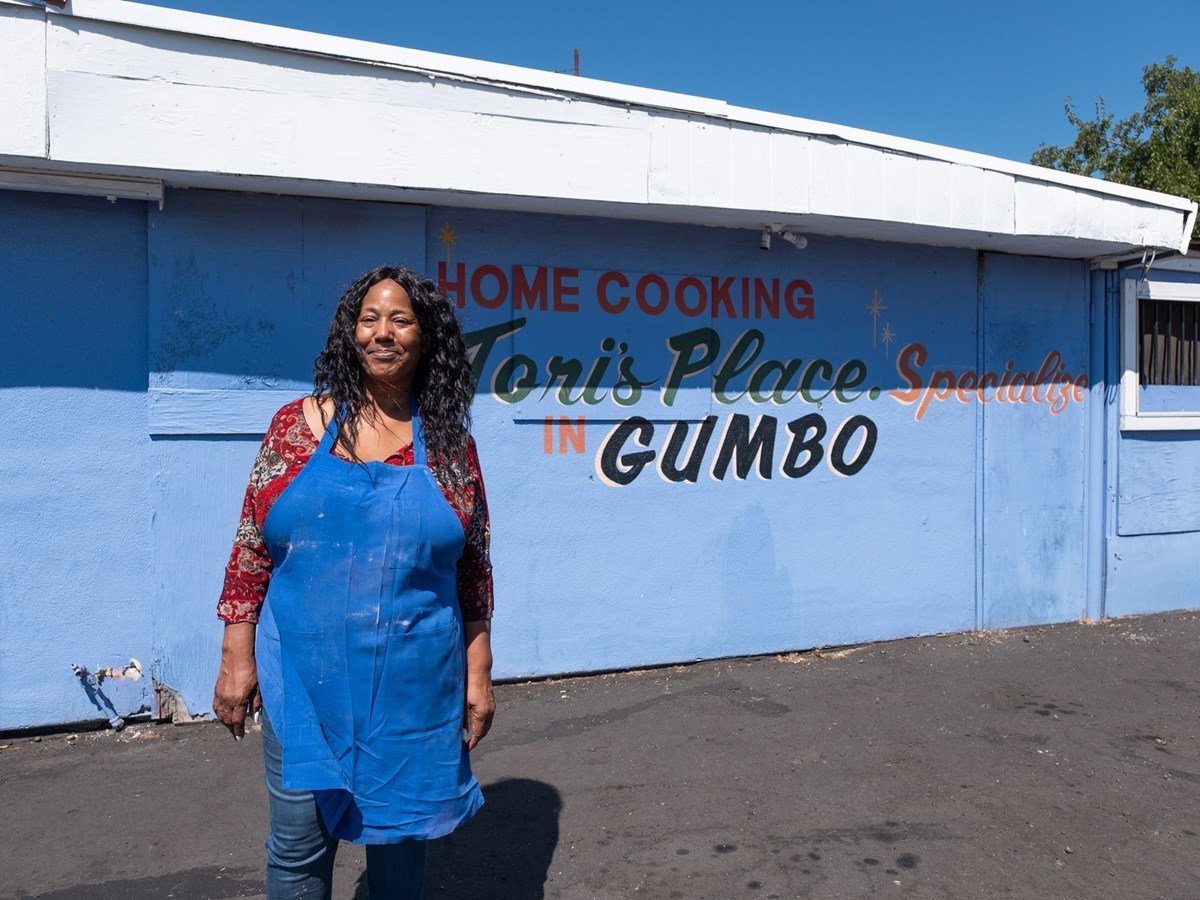
Victoria “Tori” Haggins at her restaurant, Tori’s Place. Photo by Andrew Nixon

By Steph Rodriguez

Phoebe Gutierrez recalls checking into Espanol Italian Restaurant every day after school when she was 13 years old. If she was thirsty, she’d slide behind the bar and use the soda gun. If she wanted more fries, she’d walk into the kitchen and drop a basketful into the deep fryer, listening closely as they sizzled. She even thought washing the dishes using the gigantic dishwasher was a treat.

For Gutierrez, now 33, these were some of the perks she fondly remembers as the granddaughter of Paula Serrano, who’s co-owned the East Sacramento eatery with her brother, Perry Luigi, since 1988.

Family-owned restaurants are the cultural gems of many cities. They offer teenagers and misfits alike their first jobs, nourish small staffs as well as neighborhoods, even sponsoring little league teams and hosting spirited, weekly gatherings for local bowling clubs.

But most of all, these institutions offer a sense of community, enjoyed over a home-cooked meal.

But as the coronavirus continues to spread, institutions such as Espanol continue to suffer, although some are seeing tremendous support from loyal neighbors and customers.

On August 3, the local institution served its dedicated customers one last time and closed its doors at 58th Street and Folsom Boulevard indefinitely. This ended Espanol’s unique and storied history as a place for hearty, family-style meals, dating back almost a century ago at its original location in Old Sacramento.

“I don’t see any mom-and-pop restaurant, small company being able to make it,” Gutierrez said of business during the pandemic. “I really do think we’re going to be stuck with Olive Gardens and all of the chain restaurants, because anything that is smaller — I just don’t know how they’re going to be able to sustain it.”

Espanol did receive a small loan through the Paycheck Protection Program in March, but it was only enough to help them through one payroll. Its bread and butter was hosting large parties that filled its dining room with lively chatter. But, with indoor dining prohibited, takeout orders just weren’t cutting the mustard.

On top of that, Gutierrez says the landlord raised the rent 30%. After much thought, Serrano, who’s 73, and Luigi, 62, decided it was time to hang up their aprons.

“I really think it’s the end of an era. I don’t think there’s any other restaurant, in Sacramento at least, that has that type of feel or ambiance,” Gutierrez said.

She describes Espanol as a place where you know what you’re going to get. “You knew the soup was going to be good. You knew the bread was going to be warm. You knew that you could go and get your half-carafe of wine and it was gonna cost you five bucks, because they haven’t raised the price in forever.”

Italian dinners between this Sacramento family will continue. Only this time, Gutierrez says, they will finally include her grandmother at the table.

“We can finally have Friday night dinner, which we’ve never had in my entire life,” she said, “because she always had to work.”

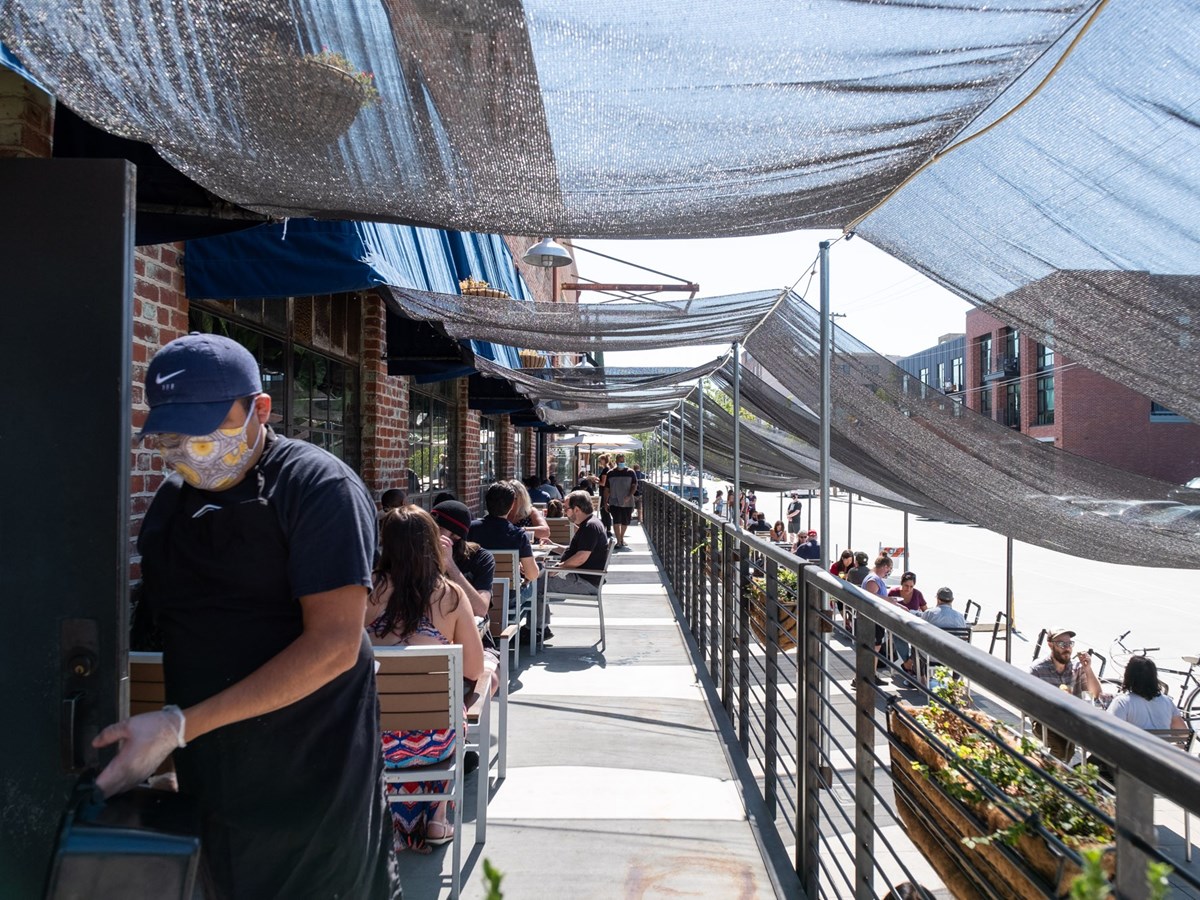
Fox and Goose Public House is open for outdoor dining. Photo by Andrew Nixon

The Breakfast Spot

The whiplash restaurants endured over the last four months, with ever-changing state and county regulations, will only continue to have dire impacts on an industry that heavily relies on patronage.

Fox & Goose Public House, which opened in 1975, went through three iterations of its restaurant since March, beginning with curbside pickup or takeout-only options.

“Our business was impacted quite dramatically in the fact that most of the people who actually come downtown to work were staying at home,” co-owner Jessa Berkey said. “So, a large portion of our patronage during the weekdays, who would normally be here doing business, were not here.”

Without weekend brunch crowds and Friday night live music, the oldest restaurant on the R Street block went from 46 employees to 28. Business did perk up once socially distant, indoor dining was back on the table in May, a time when Fox & Goose hired more staff to wait tables in its adjacent warehouse space.

The crew renovated that space and set up a full dining room with 33 tables 6-to-10 feet apart, allowing Fox & Goose to reach 78% of its normal table occupancy. Berkey says the expansion took two weeks to set up, and things looked promising. But by the start of July, indoor dining was banned once again.

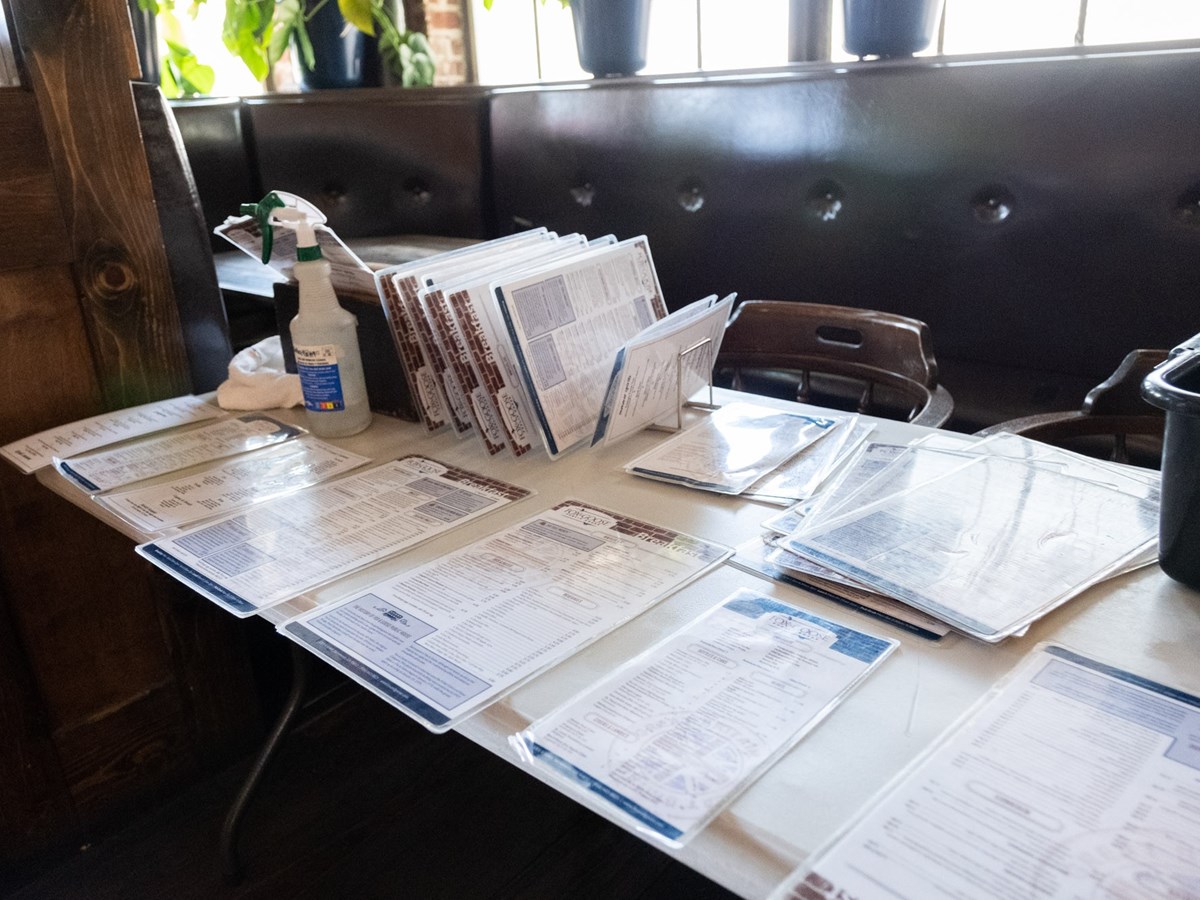
Menus are sanitized between uses at Fox and Goose Public House. Photo by Andrew Nixon

“Our team just had to be really adaptive and flexible as we tried to process the information and see how best we could implement it,” Berkey said.

So Fox & Goose pivoted — again.

Through the city’s Farm-to-Fork Al Fresco program, which helps subsidize restaurant costs to move diners outside, the restaurant was able to expand its dining capacity by setting up additional tables on the sidewalk below its patio space.

Although its new sidewalk dining area needs to be set up and broken down at the close of each service, Berkey says it’s a great improvement to the carryout and curbside model of the past. The best part about seeing more customers, she says: hearing their individual connections to this longtime breakfast pub, which serves savory English-style platters and spicy bloody Marys.

“Everyone has their own personalized moment with Fox & Goose when you ask people. Everyone has their story,” Berkey said. “We’ve had a lot of people also reaching out to us about the fact that they had their first date here, or it’s a special moment for their relationship or their family. Being open for 45 years, it does create that relationship with the community.”

The Family Pizza Parlor

Friday nights at Luigi’s Pizza Parlor used to be filled with families dining over hot slices while their kids attacked the pinball machines in the arcade room. An Oak Park establishment since 1953, Luigi’s history with the neighborhood is vast and championed by regulars who appreciate the taste of its original family recipes and the hospitality its original owner, Celso Brida, offered them many years ago.

“Almost every day, we have someone walk in here and say, ‘I remember Celso helped me when I was younger right out of high school. I needed food, I needed a job,’” says general manager Kathryn Mast. “People come in here with so much history and love for Oak Park.”

In 2019, Luigi’s was purchased by a group of longtime customers who grew up eating its pizza and wanted to see the business stay open after Celso died in 2015. These days, the dining room remains empty as Luigi’s adjusted to takeout-only in March. The building, on the corner of Stockton Boulevard and 13th Avenue, doesn’t have the outdoor space to offer customers the option to dine “al fresco.”

Mast says Luigi’s also uses third-party delivery services such as GrubHub and DoorDash to reach those customers who don’t want to leave their homes, but the commission each company takes from orders cuts into their daily sales.

“We’re happy to be here, but it’s a struggle. Fortunately, pizza is a very to-go business,” Mast said. “We don’t have a delivery service in-house, so we have to use outside delivery services … but they take 30 to 45% of every order.”

To stay afloat, Luigi’s laid off half its staff, tightened the menu and is only open five days a week. Much like Espanol, rent is also a challenge. Sales are steady enough — but nothing compared to when the dining room was full.

Through it all, Mast says she’s happy Luigi’s remains open, and looks forward to a day where she can once again host families, and even the barflies.

“The social aspect is what we’re missing out on, those connections through new customers coming in who are new to Sacramento. Let me show you the bright, beautiful life of these older restaurants like Luigi’s, Gunther’s, Espanol and the list just goes on,” Mast said. “I love working here and it’s sad that we can’t serve our people.”

The Mom And Pop

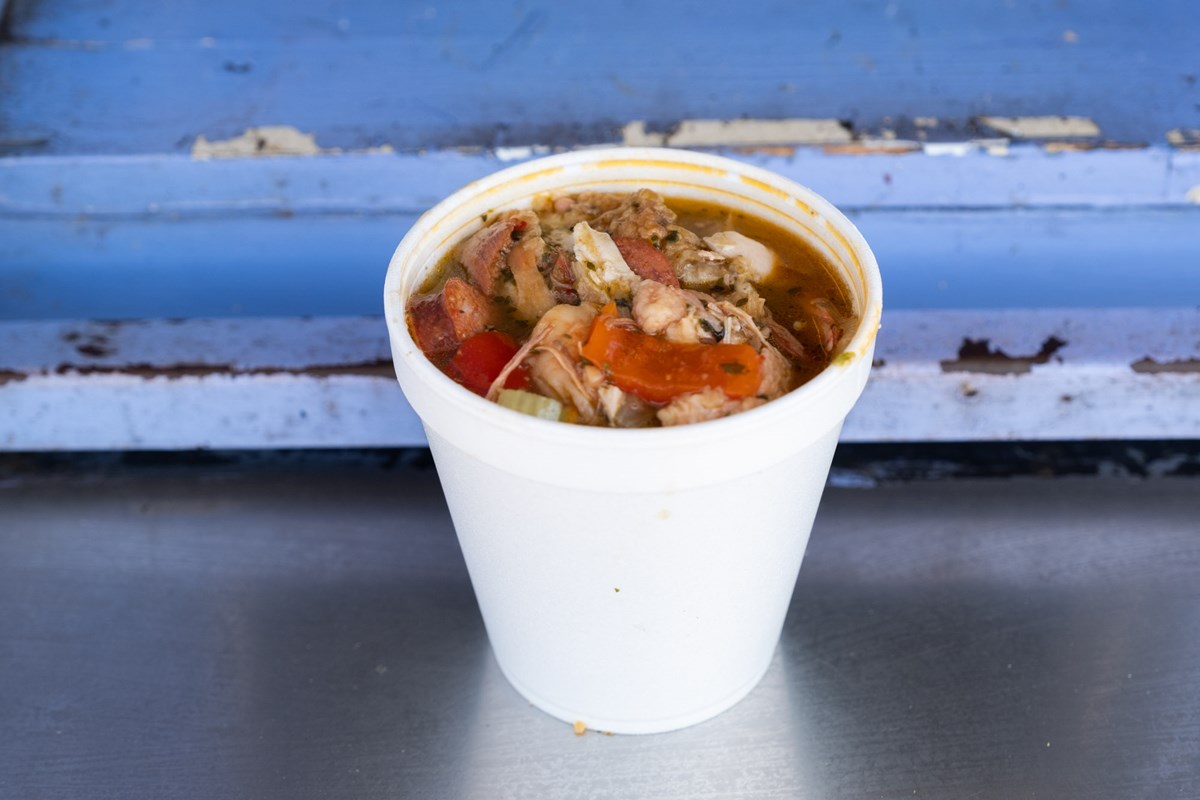
Every day just before 11 a.m., the phone at Tori’s Place begins ringing nonstop, a sign that hungry customers are in the mood for Victoria “Tori” Haggins’ home cooking, especially her recipe for gumbo with a side corn cakes.

She opened Tori’s Place on Grand Avenue in North Sacramento in 2012 and quickly became a neighborhood favorite. Through a warm voice, Haggins admits its been tough operating her small business through the pandemic. But she also says the community support she’s received gives her hope that Tori’s Place will continue to be a neighborhood favorite for years to come.

“It hasn’t really impacted me too bad. I know a lot of other people aren’t doing really good, I’m not doing great, but I’m still getting steady people coming in and I thank God for that,” Haggins said.

Gumbo is a popular dish at Tori’s Place. Photo by Andrew Nixon

At Tori’s Place, everything is made to order, with her husband taking phone customers and her granddaughter and nephew helping out when needed. Haggins says she’s reaching 75% of what food sales were pre-pandemic, which tells her that people still have a taste for her comforting dishes, such as her fried chicken and pork chop combos with a long list of homemade sides.

“People mainly want comfort food and we all need to be comforted some way or another,” Haggins said. “I try to put love in all the food when I cook. I put lots of vegetables and I try to give them great portion sizes, too. I think people really appreciate it.

“And I know I appreciate just looking at a smile on someone’s face.”

PUBLISHED AUGUST 26, 2020 WITH CAPITAL PUBLIC RADIO