Bay Area chefs say FX/Hulu show ‘The Bear’ is ‘pretty dead on’ in depictions of abusive kitchens
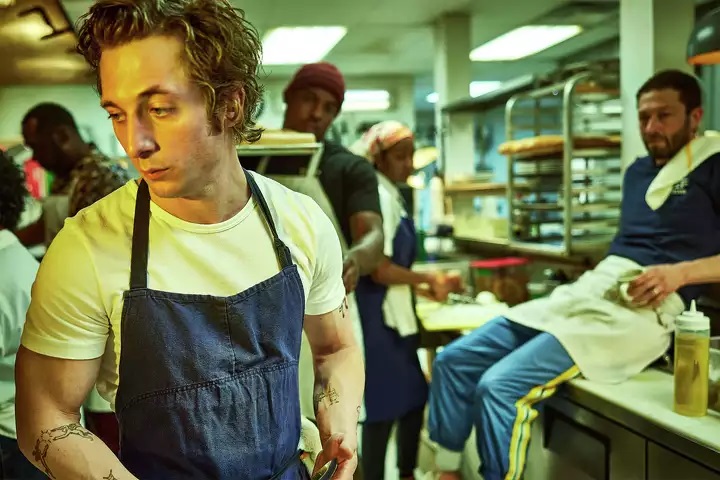
If you’ve ever prepped onions and veg in the wee hours of the morning for the day’s lunch rush, if you’ve ever been yelled at by the dishwasher for not peeling the labels off the cambros before they hit the sinks, if you’ve ever dropped a tray full of freshly baked cookies in front of customers and the business owner on your first day, then FX/Hulu’s buzzy new show, “The Bear,” will slap you right back into the thick of those suppressed memories.
“The Bear” depicts a young chef, with an extensive fine dining background, who abruptly returns home to Chicago to run his family’s sandwich shop following the tragic death of someone close to him. It’s a show filled with all the thorny, relatable moments most back-of-the-house staff experience and it’s a refreshingly honest depiction of what goes on behind the scenes to bring customers their favorite sandwich or blue plate special.
I speak from experience as someone who toiled as a cook and dishwasher at small, independently run eateries — with questionable ethics and paper-thin budgets — in Sacramento. Needless to say, not all of my experiences as a woman of color working in the restaurant industry were ones that I was ready to revisit. Yet, I binged the entire show in two days.
For Bay Area chefs, “The Bear” brought up feelings of anxiety, so much so that many admitted to turning the show off and walking away. (Variety calls it “one of the most stressful shows,” while the Atlantic said it was “the antithesis of comfort TV.”) At the same time, they’d find themselves returning to find out whether or not its leading character, Carmy, played by Jeremy Allen White (“Shameless”), could truly turn the beloved Chicago sandwich shop with its hard-knock kitchen crew around.
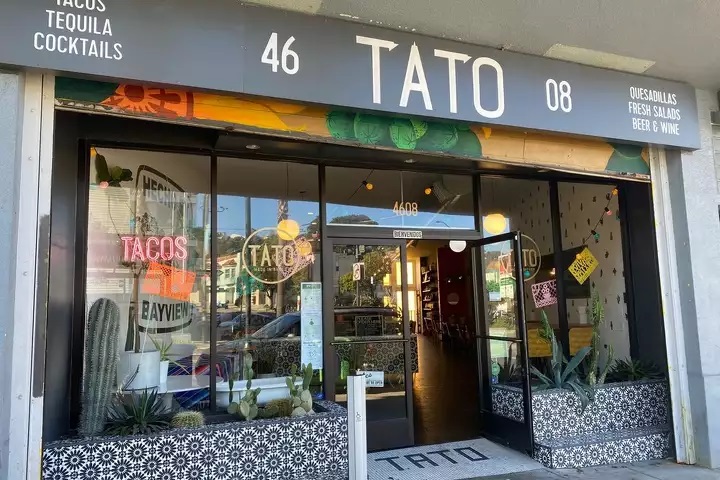
After watching the first episode, chef-owner of All Good Pizza, Cafe Alma and Tato, Kristin Houk, said the patriarchal elements of the show’s kitchen were all too familiar.
“I think that they’ve captured the chaos of a kitchen, for sure,” Houk said. “Just the intense, intense pressure, and for me, as a woman, I always felt there was a lot of sexism in the kitchen as well, and a lot of really shitty behavior, quite frankly.”
As a third-generation chef, Jarad Gallagher, who’s worked in Michelin-starred kitchens such as Chez TJ, and owns a barbecue joint in San Juan Bautista called the Smoke Point, found the show’s gritty depiction of the small Chicago eatery refreshing.
“It had a really good, realistic look into how these aren’t all lavish facilities,” Gallagher said. “It was enjoyable seeing that Carmy kind of became the way he is because of a collection of his experiences. And they’re not all good. He deals with all of the hardships that any business owner has to, and then he has to be a chef.”
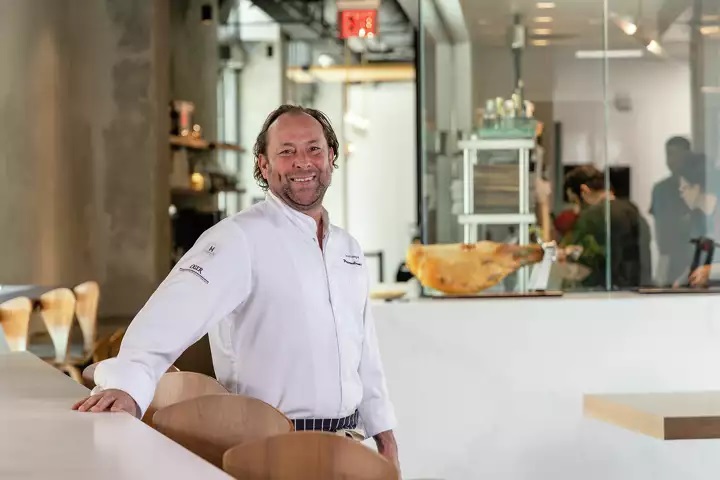
For Gallagher, who now is the executive chef at Iberian-Spanish restaurant, Broma, in Mountain View, the pressures on display in every episode of “The Bear” remind him of all the tense moments he’s experienced throughout his career cooking across six continents and throughout the country, including in Chicago.
“It has also really exposed some of the negative. So when the chef was standing next to [Carmy] in the French Laundry, where he was just telling him basically that he’s worthless — that happens,” Gallagher said. “It’s happened to me in Europe. It’s happened to me in New York, Chicago, and here. It was a little overdone. But it happens.”
As far as the accuracy of how the show’s Chicago-based kitchen known for its sliced, dipped-beef sandwiches was portrayed, chef-owner of Nightbird Kim Alter said she was pleasantly surprised at its efforts to get it right.
“I felt like they must’ve had a really good consultant, or the person who wrote was in this business because, I would say, 98% of shows that I watch are ridiculous,” Alter said. She pointed to details that “The Bear” got right — including the cutting of the tape used to make labels for food prep, and the dishwasher as an indication of how the show captured “all the things that this industry is.”

“It felt a little exaggerated in some parts, based on how I am in my kitchen and how I’ve been in other kitchens,” she continued, “but for the most part, it’s pretty dead on.”
Alter said she’s worked with every type of person portrayed in “The Bear,” whether it was during her early days as a commis or when she rose to the title of executive chef. Characters such as the ambitious leading sous chef, Sydney, to the hothead Ritchie, who has deep ties to the family restaurant — Alter has cooked with them all.
Throughout the show, lead character Carmy endures vivid flashbacks that thrust him head-first into the high-pressure situations of his Michelin-star kitchen days. For Alter, those scenes, in particular, were highly relatable as someone who’s worked in some of the most successful restaurants in the Bay Area, including Manresa, Ubuntu, Aqua and Acquerello.
“All I ever was in growing up was very militant, disciplined kitchens and I personally like that,” Alter said. “I think it gives you consistency and it builds a better cook. I don’t agree with how I’ve been treated my entire career. I don’t treat people the way that I was treated. But, the discipline of a Michelin-star kitchen where you’re cutting your tape and everyone’s ‘chef’ and you’re just working hard, it leads to a better product, so that part [of the show] didn’t give me anxiety.”

What did stick out to Alter in the show was stressful moments, such as when the restaurant’s toilet breaks and there’s no choice but to open, or when the power goes out adding to the day-to-day challenges.
“As a chef, cooking is the easy part. It’s the dealing with the personalities, it’s the dealing with your toilet breaking, your power going out at 7 o’clock, like all of those things are never really portrayed because it’s a little bit more romantic in movies, or TV,” Alter said. “That’s the reality of it. Consistently, every day, it’s something and that’s very relatable to me. Literally, every week my power goes out, or a customer flips out, or I get extorted by Google. So it’s relatable in that sense.”
For chef-owner Adam Rosenblum of Red Window, Causwells and Little Red Window, the anxiety felt in the silence during Carmy’s Michelin-star flashbacks reminded him why that path as a chef just wasn’t for him.
“Each episode that I’ve seen, there’s been a little piece that has hit home,” Rosenblum said. “All my friends went the fine dining route. They were the ones getting berated and yelled at and told that they were a piece of garbage. That just has zero appeal to me. I wanted to make really good food. But I knew from early on that I just wouldn’t thrive in that kind of environment.”
There was one instance in “The Bear,” however, that Rosenblum said was completely inaccurate.
“When the full 22 [quart] of veal stock was on the top shelf, I was like, no one in their right mind would do that,” he said. “A, no one would have taken the effort to lift something that heavy onto the top shelf when there’s plenty of room elsewhere. And B, you know how that’s going to end.”

Rosenblum said being a good leader for his restaurant family, who are sometimes the folks he sees more than his own wife and kids, is high on his list of priorities. The show’s hard look into drug and alcohol abuse, for example, was a reminder of how some chefs and their kitchen crew deal with the stresses of the job.
“It’s pretty noticeable when people are abusing. Obviously, at work, we have a zero-drug policy. But then, it’s more than that,” he said. “When we’re seeing someone struggling, it’s about talking to them and figuring out how we can support them.”
Across all of his restaurants in San Francisco, Rosenblum says the challenges seem never-ending, but that doesn’t stop the order tickets from pouring in. At the end of the day, there are a lot of things that keep him in this fast-paced, high-stress environment and the food is just one aspect.
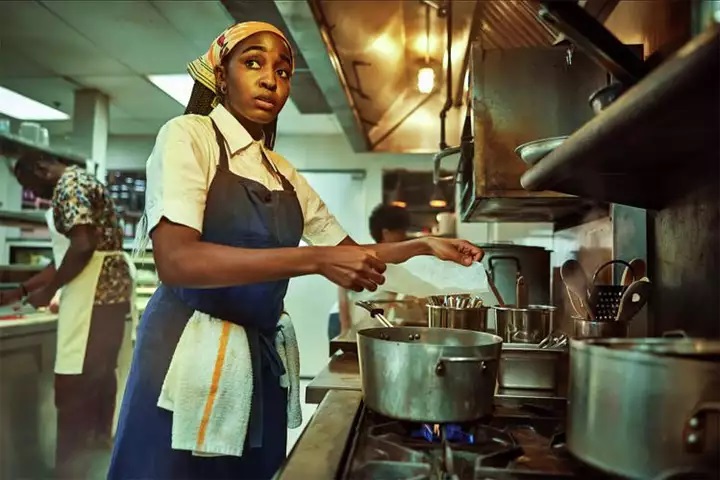
“There’s a lot of things that keep me in this ridiculous industry. It is so silly, especially now with all of the labor issues that we’re having, it’s even sillier,” he said. “We’re all stretched even thinner and costs are going up and margins are going down. It is the wrong time to be in the restaurant business — but it’s also a great time. I think it’s always going to be like that. There’s always going to be something that brings us down and then there’s going to be all of these positive things that remind us of why we do what we do.”
With high profile instances of accused sexual harassment from East Coast restauranteur Mario Batali, whose trial began in May, to the alleged hostile and abusive work environment created by celebrity chef-owner, Michael Chiarello, of the San Francisco tapas bar Coqueta, the industry is already working to address the issues of problematic behavior seen on “The Bear.”
To combat toxic behavior across her restaurants, Houk told SFGATE that she first and foremost hires women. All Good Pizza, for example, is her all-women-led restaurant in the Bayview-Hunters Point neighborhood. Houk is also the head chef-owner of Tato, and her third restaurant, Cafe Alma, is also helmed by a woman.
She also conducts extensive training with everyone on staff when they join, which includes equality and kitchen safety courses to ensure everyone knows they have a voice.
“Nothing is ever going to be tolerated related to sexism or racism or any kind of bullshit like that,” Houk said. “To be quite frank with you, if I ever saw that in my kitchen, I would immediately get rid of the people. But I feel like I’m a pretty good gauge of that when I’m hiring people, so I don’t really ever fill my kitchens with that type of machismo attitude.”
This article was published with SFGATE on July 15, 2022.
How San Francisco’s legendary It’s-It ice cream was almost lost to history

San Francisco’s iconic, dark chocolate-dipped frozen treat was almost lost to history.
After the lauded oceanside amusement park Playland-at-the-Beach was torn down in 1972, the It’s-It recipe changed hands from park founder George Whitney to San Franciscan George Mavros.
Despite the seaside funland’s demise, Mavros set up shop near the historic windmill to continue the tradition of hand-dipping the popular ice cream sandwiches the old-fashioned way. But eventually, demand became too much for him to handle alone.
That’s when Charles Shamieh, whose family once owned a restaurant called Jamal’s Pizza and Ice Cream on Castro Street, happened to be at the right place at the right time.

“We never met George Whitney ourselves,” Shamieh, now president of It’s-It Ice Cream, told SFGATE. “We bought it from the person that [Whitney] sold to because he thought when Playland was torn down, that is the end of the history of It’s-It. … So we evolved it.”
Through the decades, many sweet treats with roots in amusement parks and world’s fairs, such as funnel cakes and ice cream cones, have become synonymous with summertime childhood fun. But the legendary It’s-It, first created by Whitney in 1928, truly made a lasting impression, capturing the hearts and taste buds of Playland attendees with its simple made-to-order delight.
“When you say the word ‘It’s-It,’ it’s like saying the word ‘Coke,’” Shamieh said. “People are going to know what you’re talking about: cookies, ice cream and chocolate.”
‘It’s a winning combination’
In the late 1960s, Charles Shamieh lived a few blocks away from Ocean Beach. He would visit Playland often, braving the thrill of the Big Dipper roller coaster, or trying his luck at various 10-cent carnival games.
“That’s my memories with it, back before they tore it down,” Shamieh said. “The It’s-It stand was there, where you could buy an It’s-It with two cookies and they put the ice cream in between, and dip it in chocolate and give it to you in a paper bag.”
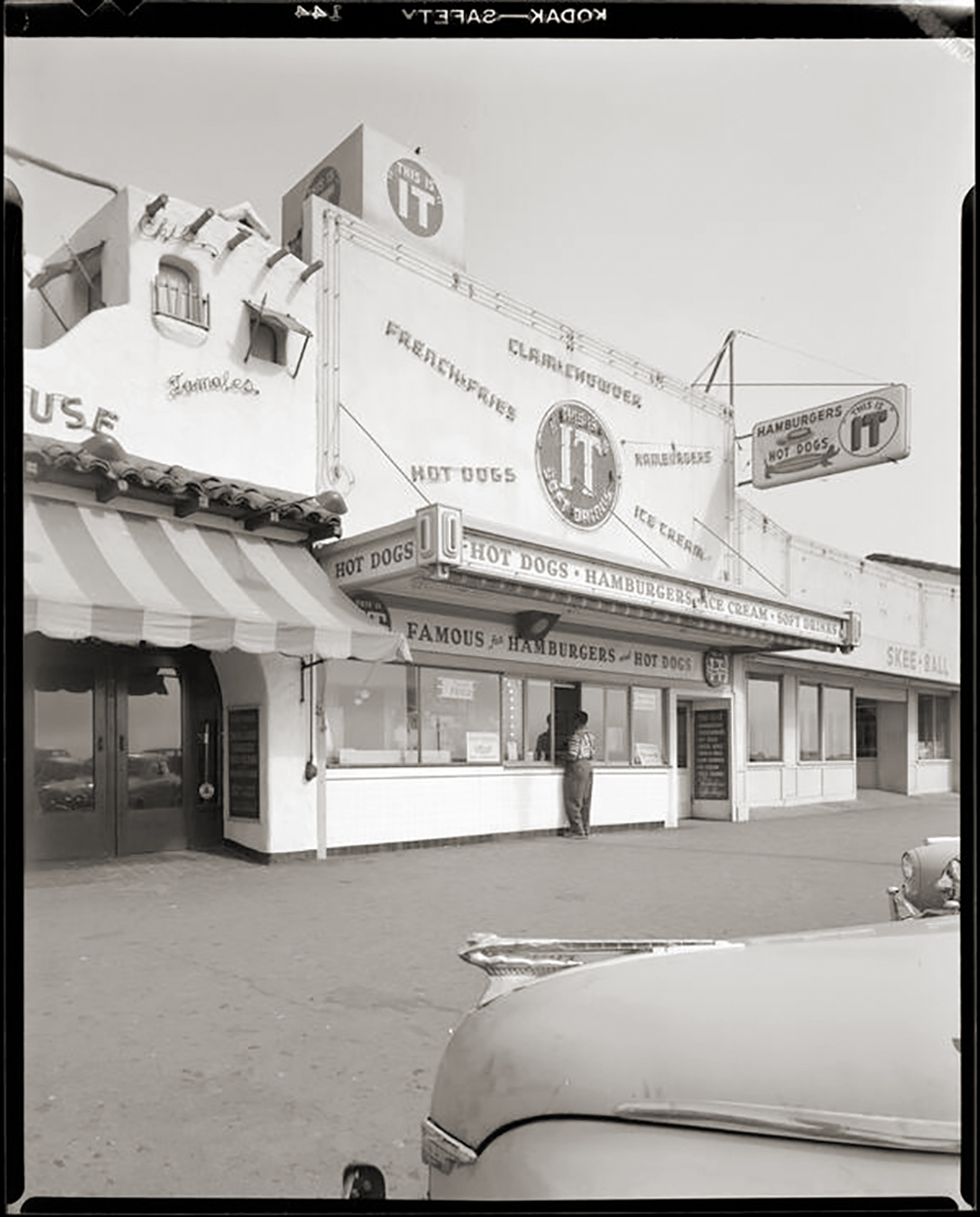
Back then, vanilla was the only flavor, and Shamieh never forgot the taste of his first It’s-It. After Playland was demolished in the early ’70s, and Mavros took over the treasured recipe, Shamieh’s family, which also includes the McDow and Zaru families, soon purchased the It’s-It brand in 1974. They quickly expanded into a small factory in SoMa at 270 11th St. It’s now home to 11th Street Auto Repair, which mostly services Land Rovers.
Two years later, It’s-It moved operations to the 17,000-square-foot facilities in Burlingame where its headquarters have remained ever since. A staunch believer in keeping the integrity of the original recipe, Shamieh told SFGATE the beloved ice cream sandwich is a true taste of what San Francisco was like during the golden days of Playland.
“When somebody takes a bite of It’s-It, and they’ve never had it, the first words you hear are, ‘Oh, I love it! I love the taste.’ So there’s nothing to improve on it,” Shamieh said. “We make our own cookies, we process our own ice cream and we have the chocolate formulated from our own



As for the reason why the It’s-It tastes so fresh, Shamieh told SFGATE that the foundation of this classic frozen treat is baked daily by the thousands from the Family Cookie Company in Suisun. It’s a company owned by the Shamieh family — and it’s been that way since 1977.
“By the time they make the cookies, they’re shipping it to us within a week, and within two to three days, it becomes an ice cream sandwich and it’s frozen,” Shamieh said.
As a result, the handheld desserts need no preservatives.
“The quality, the natural product is the secret to It’s-It,” he added.
As far as the lore behind the invention of the It’s-It goes, Shamieh said he’s heard the same story that has been passed down by word-of-mouth to many San Franciscans since 1928.
“The story that we’re able to basically gather from people who were working then, was that [George Whitney] was working with ice cream and cookies, and tried the combination dipped in chocolate,” Shamieh recalled. “It tasted really fun, and he said, ‘Oh! It’s-It! That’s it!’”
‘Some people … can eat three and four of them’
On average, the It’s-It factory produces more than 100,000 ice cream sandwiches per day, Shamieh said. While the cherished ice cream treats are mostly sold west of the Rockies (Oregon, Washington, Nevada, Utah and Hawaii), their main concentration remains throughout California.
Whitney’s original flavor, vanilla, is still the most popular.
“For the longest time, we were making vanilla and mint,” Shamieh told SFGATE “Those were the only two flavors sold on the market. Then, we added the chocolate and that did well. We added the cappuccino and that did really well.”
The full run of flavors now includes those three, which are the easiest to find, plus strawberry, and then pumpkin, which is available around the holidays. Green tea is the most recent flavor to be added to the mix.
The introduction of more new flavors isn’t likely, Shamieh said. The company doesn’t experiment often because the core flavors do just fine on their own, and there is limited freezer space at the facility for a wider variety of options. So, naturally, this means there is no official taste tester job at It’s-It HQ. That honor is handled by the family. …
This story was originally published with SFGATE on Dec. 23, 2022.
Michelin’s undercover restaurant inspectors dine out 350 times a year

As an undercover Michelin Guide restaurant inspector, one must never be seen.
They’re like the secret agents of the culinary industry. They dine at the most prestigious restaurants — all under the guise of anonymity. Those who operate within this completely nameless profession have dedicated themselves to providing foodies and travelers alike with the world’s top-notch recommendations for more than a century.
SFGATE spoke to one of Michelin’s chief anonymous inspectors ahead of the Michelin Star Revelation 2022 awards ceremony on Dec. 5, which honors California restaurants seeking the highly sought-after Michelin Star recognition. This year, the event is hosted at the Petersen Museum in Los Angeles.
Michelin’s inspection team is made up of hotel professionals with at least 10 years of work experience in that particular field, according to one of the guide’s anonymous chief inspectors. Inspectors are also known to have culinary degrees, have worked in either the front or back of the house and may even be a trusted sommelier.
“Keeping anonymous, that’s a challenge,” Michelin’s chief anonymous inspector told SFGATE. “It’s interesting. It’s something that we think of every day, but it’s really no easy feat. And it’s something that is paramount to the success of our position as inspectors doing what we do.”
It’s important for inspectors to remain undercover because it’s the only way to ensure that Michelin’s trusted secret diners receive the same culinary experience as any regular guest. Gwendal Poullennec is Michelin’s international director and leads a worldwide team of inspectors that operates across Europe, Asia and North America.
“All the Michelin Guide inspectors are full-time employees, working for Michelin only and eating lunch and dinner about 300 to 350 times a year, so it’s really a full-time job,” Poullennec told SFGATE. “They’re all passionate, but they decided to make the move and to make it a living.”

Poullennec added that a Michelin restaurant inspector never goes to the same establishment twice to not only keep their identity anonymous but also to ensure that all decisions are based on several experiences from different inspectors during various times of the year. The consistency of the restaurants Michelin recommends is of utmost importance.
“When we look at the selection of restaurants for California, of course, we are always impressed by the diversity of the cooking style, but also by the fact that many of these restaurants are fully offering a unique California-style experience,” Poullennec said.
As far as the most memorable bites the anonymous chief inspector tasted across more than 300 dining destinations during lunch and dinner service, there was a particular sweetbread dish with Japanese black curry he thought was “absolutely phenomenal.” Still, he remained tight-lipped about which San Francisco-based restaurant the star dish belonged to ahead of tonight’s ceremony.
“So many bites over so much time,” he said. “When I look back at the inspector’s report, that was something that was really, really notable and just speaks to what the chef is doing there combining traditional techniques with the chef’s background and modern products — so it was just really fabulous.”
As the Golden State’s fine dining establishments await the news of the latest Michelin-star honors, the undercover restaurant inspector said each year he not only looks forward to what California cuisine has in store for diners but also what San Francisco has in particular.
“I think San Francisco continues to be such a really interesting area that has its own really strong talent base and also draws talent from elsewhere,” he told SFGATE. “Every year, we just look forward to starting selection again and seeing what it’s going to reveal.”
This story was originally published with SFGATE on Dec. 5, 2022.
How San Francisco’s Casa Sanchez tortilla chips became a California staple
“We just started cutting them, salting them and putting them into bags. That’s how we got into chips.”
With sleepy eyes, just before the sun cracked the sky, a then 5-year-old Robert Sanchez accompanied his father, also named Robert, to the family tortilleria on Fillmore Street, R. Sanchez & Co. The alluring scent of warm corn tortillas filled the air as he watched busy workers starting the lengthy process of turning sacks of dried corn into handmade tortillas that were then packaged and distributed to nearby restaurants.
“I remember it was just so fascinating for me,” Sanchez, now 65, said. “The philosophy that we use to make tortillas today has not changed since it was made originally in 1924.”
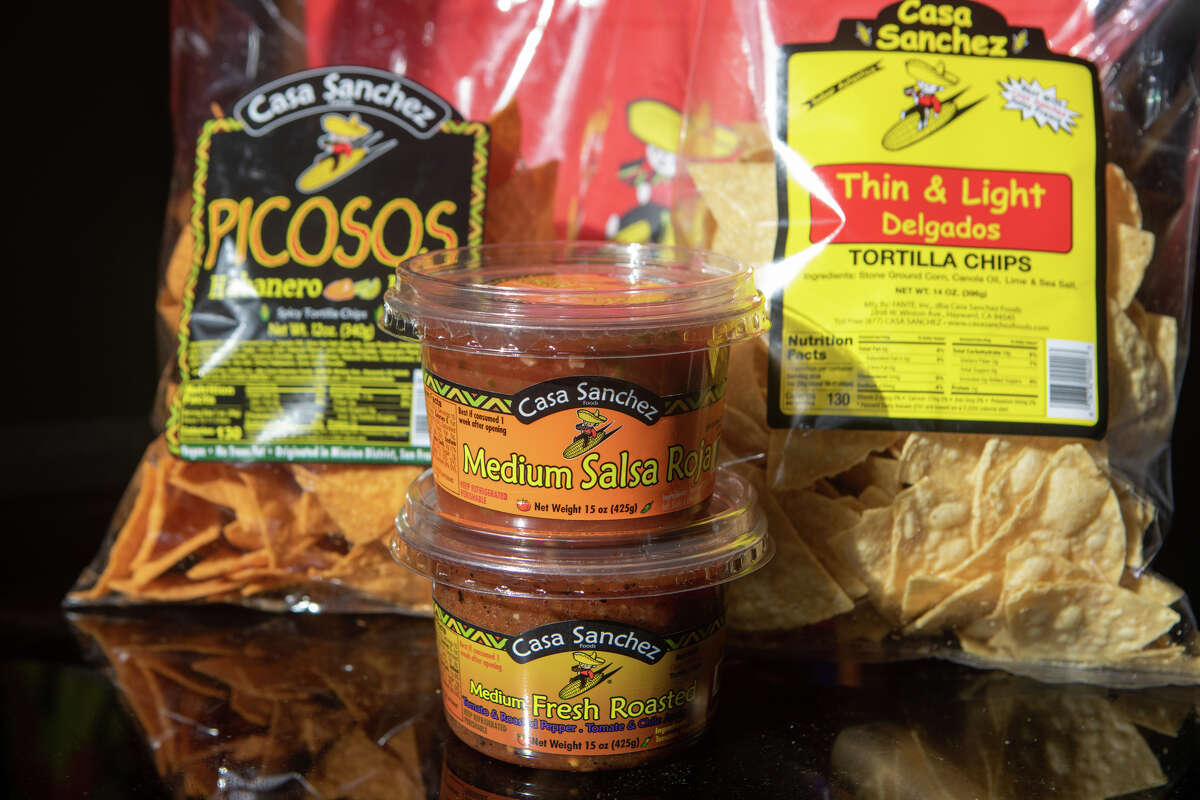
Today Sanchez is the president of Casa Sanchez, a third-generation, San Francisco-born business that’s known for its thick-and-crispy chips (aka “gruesos”), chunky salsas and arguably some of the best guacamole found in grocery stores nationwide.
The origin story behind this family-run business, however, is one built by an indomitable work ethic followed by decades of innovation and even a bit of risk-taking. But it all started with a few humble ingredients and the time-tested recipes that have kept Casa Sanchez a household name for almost a century.
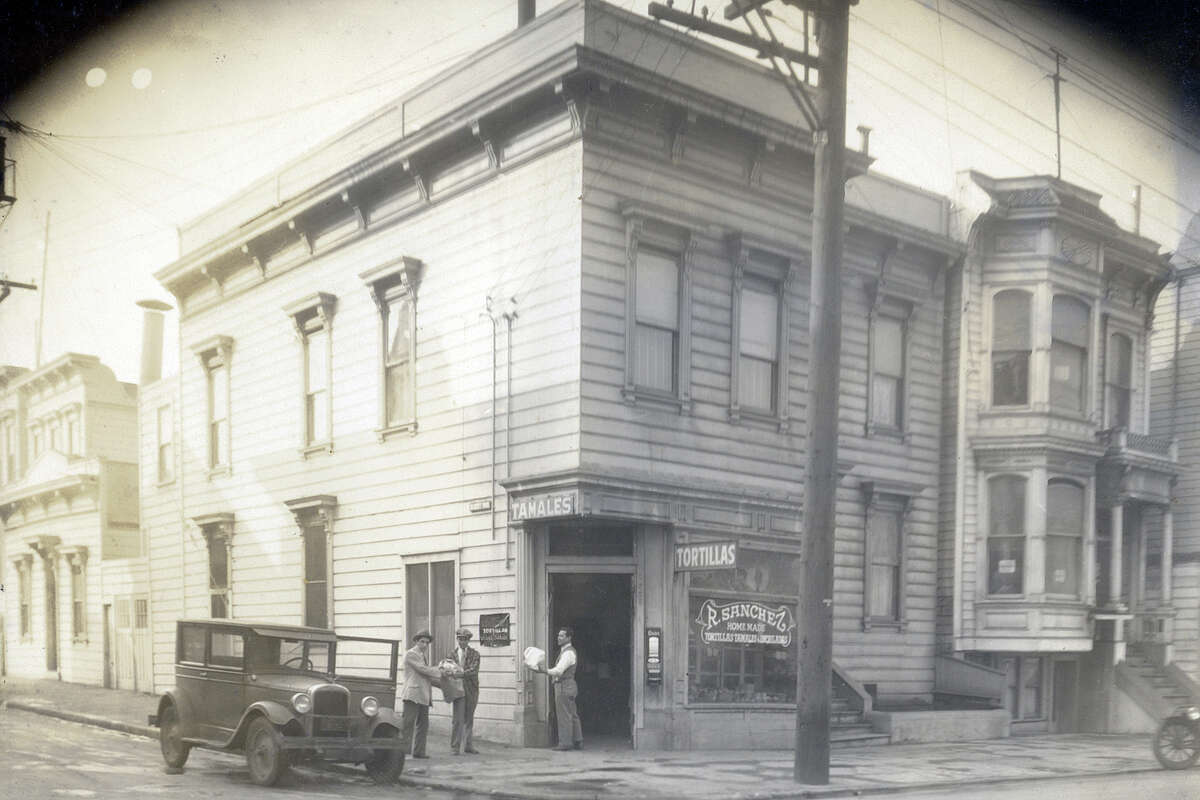

The exterior of the original Casa Sanchez headquarters at 1759 Broadway, circa 1930, at left. Co-founder Roberto Sanchez I, at right, wearing a black tie, inside the Casa Sanchez kitchen during the 1930s. (Photos courtesy of Robert Sanchez)
‘There’s nothing better than a hot tortilla’
Roberto and Isabel Sanchez (the grandparents of young Robert) immigrated from Zacatecas, Mexico, and landed in San Francisco in 1924, where the couple would open their first business on Broadway. Back then, R. Sanchez Tamale Company operated as a grocer selling “Spanish food,” which included tortillas, spices and chorizos.
In 1953, with the support of the next generation, which included children Juliana, Lupe and Robert, the business expanded as a Mexicatessen with a tortilleria at 1923 Fillmore St. — where 5-year-old Sanchez first laid eyes on the assembly line of fresh-made corn tortillas.
“There’s nothing better than a hot tortilla that puffs up with nothing on it,” Sanchez told SFGATE. “In those times, it was all tortillas, corn tortillas.”
He noted that as the Hispanic community started to grow in the Mission, so did the demand for tortillas. But with so many tortilla deliveries to local restaurants, the Sanchez family would eventually wind up with a few day-old batches.


Left: Boxes of Casa Sanchez tortilla chips are stacked up and ready to be distributed at the Casa Sanchez manufacturing facility in Hayward, Calif., on Feb. 15, 2023; Right: Casa Sanchez CEO Robert Sanchez poses with the company’s logo at Casa Sanchez headquarters in Hayward. Douglas Zimmerman/SFGATE
“They were still good, but they were kind of stiff. So what do we do with them?” Sanchez said. “We just started cutting them, salting them and putting them into bags. That’s how we got into chips.”
In 1968, Casa Sanchez moved to 2778 24th St. It was at this time that the family also evolved the iconic logo, which depicts a little character with a friendly smile and a yellow sombrero as he blasts off into space straddling a corn-shaped rocket. …
Published with SFGate March 1, 2023. Read the full story here.
50-year-old San Francisco German specialty store saved by loyal customer

When Lehr’s German Specialties abruptly closed its doors last August after nearly 50 years as San Francisco’s dedicated shop for hard-to-find German brands and imported treats — it didn’t stay closed for long.
Hannah Seyfert, a loyal customer who moved to San Francisco from Germany in 2016, often frequented Lehr’s for a taste of “heimat,” or home. She took comfort in the little specialty shop on Church Street that carried all of the familiar brands she’s enjoyed since childhood. So when it closed, she called its owner, Brigitte Lehr, and made her an offer.
After months of renovating the space, including new flooring, fresh coats of paint and restocking the aisles with all of her favorite fruit jams, cheese sausages, crusty breads, artisan chocolates and stinky cheeses, Seyfert reopened Lehr’s in late November that same year and welcomed back customers from the neighborhood and beyond.

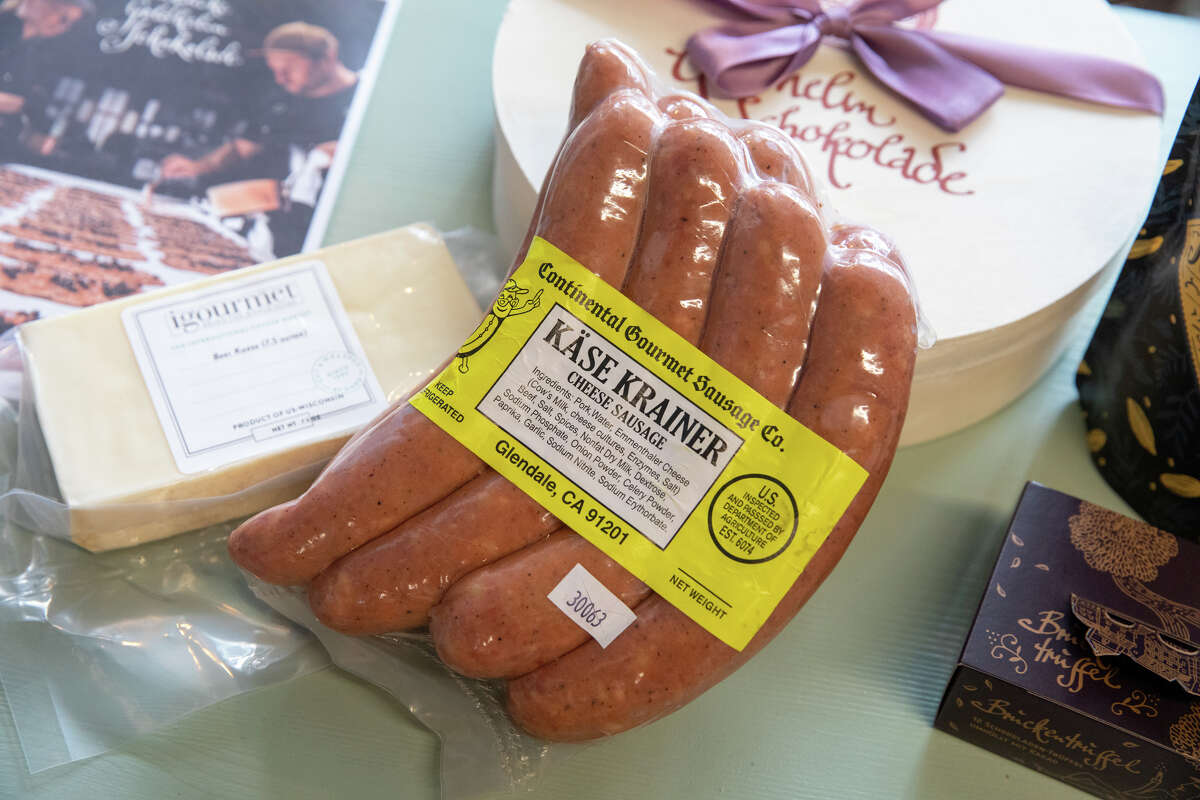


“All over the store, we have these little pictures to show how it would’ve looked like six months ago if you were standing here,” said Seyfert, as she pointed to a small, framed photograph tacked to a pole. “It’s like a memory lane and it’s important for us to show that the store has a very long history.”
Since Lehr’s reopened, Seyfert said customers trek all the way from Tahoe, Nevada City and Sacramento. One couple from Santa Barbara didn’t even stop to check into their hotel — their first stop was Lehr’s.
“We’ve been so crazy busy, I’m just hoping we can keep up with that,” Seyfert said. “We’re working on the web shop right now, so customers from everywhere else can order.” …
Published with SFGate February 1, 2023. Read the full story here.
San Francisco bakery pulls all-nighters to bake ‘pan de muerto’ by the thousands
SFGATE food editor Steph Rodriguez searches for a taste of home through pan dulce

As a child growing up in the remote, tiny settlement in Kern County known as the Mexican Colony, a man peddling sweets in an unconventional white van would visit daily in the late afternoons. Like clockwork, he’d roll up in front of my grandma Lilly’s house in Shafter, California, with all the neighborhood kids trailing behind to be first in line.
Once parked, he’d hop out and walk to the back of the van before swinging open two large doors to reveal racks on racks of freshly baked pan dulce neatly displayed to the amazement of all of us niños. He was our neighborhood’s ice cream man.
I recall gripping a $5 bill that my grandma had given me with clear instructions on what she wanted: conchas, puerquitos, cuernitos, besos and niño envuelto, a soft sponge cake that’s rolled in coconut flakes with a swirl of strawberry jam in the center.

As a new Bay Area resident, pan dulce is one of my comfort foods. I can trace some of my fondest memories back to the molasses and ginger-laced puerquitos, or pig-shaped pastries. I recall tearing off a piece of pink-frosted concha before running outside to play with my cousins. Those flavors not only bring me back to the colony, to my roots, but it’s a food I often seek out when I’m feeling homesick.
With this in mind, I spent the day in San Francisco’s Mission tasting pan dulce from longtime panaderias such as La Victoria to La Reyna and ending with La Mejor Bakery near the 24th Street BART station. There, I met bakery owner Carmen Elias, a sweet woman originally from Mexico City who first opened her shop at 3329 24th St. in 1993.
When I walked in, she was anticipating incoming orders for pan de muerto (bread of the dead), fragrant rounds of cinnamon and star anise marked with crossbones made out of dough. It comes in many shapes, some even made to look like little people with crossed arms and sugary smiley faces.
At La Mejor, pan de muerto is Elias’ bread and butter in honor of Dia de los Muertos, a Mexican-born holiday that honors loved ones who’ve died. The celebration of life takes place each year on Nov. 1 and 2, with the first day honoring children and the following day dedicated to adults. …
Published with SFGate November 1, 2022. Read the full story here.
Netflix’s ‘Great British Baking Show’ showed the world what it really thinks of Mexico
SFGATE food editor Steph Rodriguez on the TV hit saying the quiet part loud

One of the world’s most comforting television series became one of the most offensive on Friday. Netflix’s “The Great British Baking Show” released its newest episode, entitled “Mexican Week,” and it is laced with plenty of problematic stereotypes, causing immediate backlash on social media.
But the cherry on top comes during the opening scene, where comedian-hosts Noel Fielding (“IT Crowd,” “The Mighty Boosh”) and Matt Lucas (“Doctor Who”) wore long, colorful serapes and round sombreros in the middle of a well-manicured green lawn just outside of the show’s famous white tent. As online critiques spread like wildfire, I decided to watch the full episode. As it unfolded, I blinked in bewilderment. How did this get made?
“I’m really excited for ‘Mexican Week,’ absolutely pumped,” Fielding said, while wearing a culturally appropriated outfit. “Although, I don’t feel we should make Mexican jokes, people will get upset.”
“What? No Mexican jokes at all?” Lucas asked his co-host. “What, not even Juan?”
“Not even Juan,” Fielding replied with a smile.
“Welcome to the Great British Baking Show!”
Oh boy.
If you’ve never seen the 12-year-old British baking competition that has captured America’s heart for more than a decade, this season is judged by blue-eyed, renowned master baker Paul Hollywood and Prue Leith, a South African restaurateur. It’s also co-presented by comedic actors Fielding and Lucas, the bozos in the cheap costumes I mentioned earlier.
Each episode tasks amateur bakers with three challenges: a signature, a technical and a showstopper bake. In the case of “Mexican Week,” the contestants baked pan dulce (sweet breads) for the signature test.
At local panaderias (bakeries), pan dulce comes in countless varieties, from coconut-flaked sponge cake with raspberry swirls to the more recognizable concha, which my grandmother always enjoyed with coffee.
Many of the bakers opted to try their hands at conchas, round buns with a sugary crackling top that’s been scored. Once conchas come out of the oven, the sweet coating resembles the tops of seashells. It’s what the word “concha” means: shell.
Throughout the challenge, it was clear that a majority of the bakers couldn’t be bothered to put much effort into pronouncing simple words such as “concha” or “besos,” which means kisses.
During the technical, bakers attempted to make steak tacos with “spicy” beans, pico de gallo and guacamole. In this taco challenge, one woman even pronounced “guacamooolee” with so many vowels that it’s turned into its own meme by now.
The show’s producers choosing tacos for the technical on a baking show really shows a lack of research into Mexican food and culture. Instead of choosing a bread-baking challenge where contestants tried recipes for crusty rolls such as bolillos, or even birote salado, which is our version of sourdough bread, the show chose tacos. For bakers. …
Published with SFGate October 4, 2022. Read the full story here.
Bay Area Costco stores’ latest ice cream flavor uses the world’s most pungent fruit

By Steph Rodriguez, SFGate
It’s one of the richest, fattiest fruits and treated as a delicacy across Southeast Asia. It’s also known for its pungent reputation, which once led to the evacuation of an Australian university campus. It’s even banned from being carried on subways, aboard airplanes and in certain hotels overseas.
Durian, with its bright yellow meaty interior, is a fruit you either love or hate — and it’s coming to a Bay Area Costco near you in pint-sized ice cream form this October, dreamed up by the two sisters behind San Jose-based Mavens Creamery.

“Some things just can’t be explained,” said Christine Nguyen, co-owner of Mavens Creamery. “I get it. It’s off-putting. It’s a very strong smell. But, everyone in our family enjoys it.”
To certain people, Christine said durian may smell like leaking gas or rotten eggs. But for her family, durian was a fruit they grew up eating after dinner as a dessert, or whenever their mom would see the oblong, spiky fruit at the grocery store.
Growing up in a Vietnamese family, Gwen Nguyen, who is Christine’s sister and the founder of Mavens Creamery, said durian was simply a part of their childhood growing up in the Bay Area, and it evokes positive food memories.
“There are just certain ingredients that are introduced being Vietnamese. Fish sauce, that’s in our DNA. So durian fruit, I just have always known for it to be a part of a dessert or a fruit after we would have a meal,” Gwen said. “It is a delicacy fruit, though, and it’s very rich, so you probably wouldn’t want to have it every day.” …
Published with SFGate September 15, 2022. Read full story here.
How a grandmother’s secret recipe inspired this SF food truck’s sell-out menu

(Photo: Douglas Zimmerman)
By Steph Rodriguez, SFGate
Cooking her grandmother’s peanut sauce recipe for the first time was haunting.
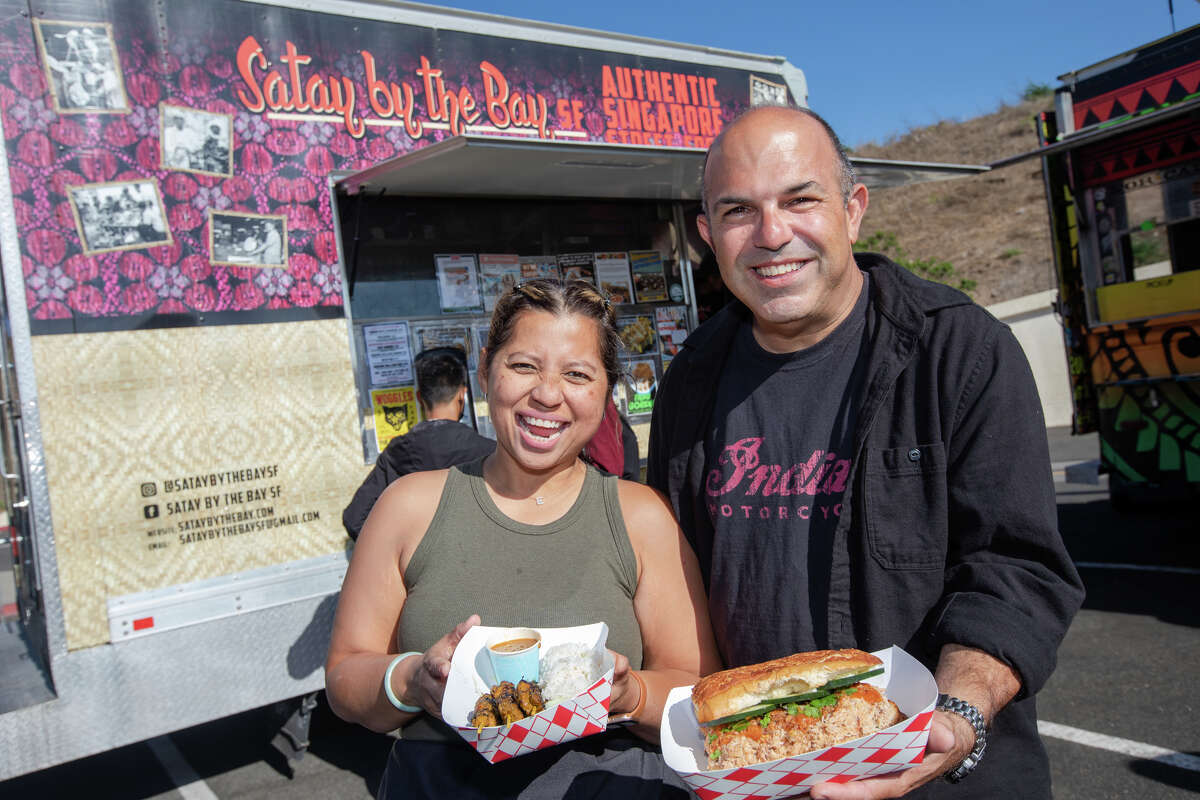
For decades, Elly Greenfield’s cousins back in Singapore kept those handwritten ingredients close — until one day, when Greenfield revealed she was opening her own satay business, she was let in on the family secret.
“When I started making it, I started crying like, ‘Oh my god, this is so her!’” Greenfield said. “I cried. I had to call my cousin, and I said, ‘Oh my god, I can’t believe it! This tastes like grandma’s recipe. This tastes like grandma’s food.’”
Along with her husband, David Greenfield, Elly is the co-owner of Satay by the Bay, San Francisco’s only Singaporean-Malay food truck, serving home-cooked dishes inspired by recipes from her mother, Yahtimah, and paternal grandmother, Fatimah. About five days a week, Elly serves her customers food rooted in Southeast Asian flavors with plenty of blended onions, garlic, ginger and dried chilis at its foundation.
(Photo: Douglas Zimmerman)
At the truck, which can be found weekly at the new Presidio Tunnel Tops park, and regularly at Off the Grid’s Fort Mason Center and Menlo Park locations, customers choose from a concentrated menu that often sells out. It features halal chicken satay skewers, spicy chili crab or chicken satay sandwiches, loaded Dutch fries and tahu goreng, a delicious crispy tofu bowl with fresh bean sprouts, carrots and cucumbers topped with Elly’s show-stopping peanut sauce.
“All of it. The color. The smell. It feels kind of haunted. It just brought back all my memories because my grandmother used to cook every weekend for a party of people,” she said. “The grandkids would be at the house playing, and I would see her in the kitchen.” …
Published with SFGate August 25, 2022. Read full story here.
Oakland deli with rich family history serves the tastiest cheap sandwiches

(Photo: Douglas Zimmerman)
By Steph Rodriguez, SFGate
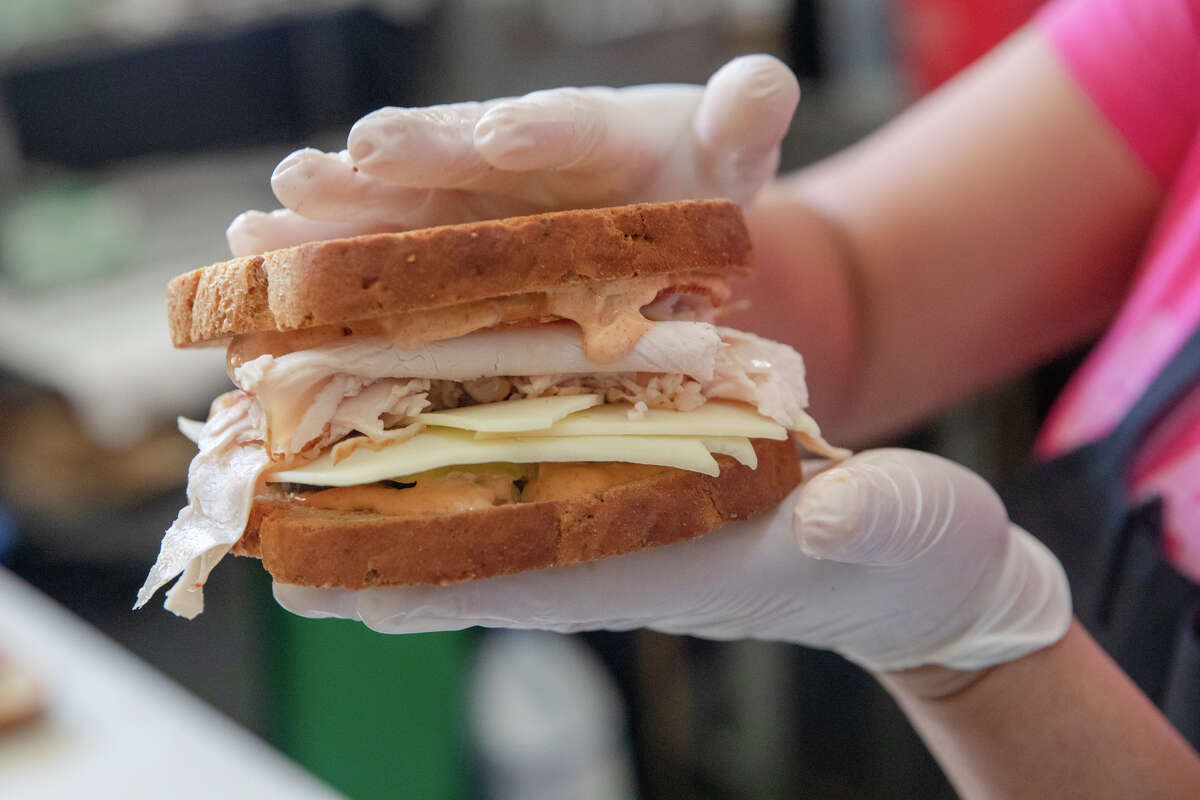
Elena Durante said stepping into her father’s store as a child overwhelmed her senses. Growing up in the family-run grocery business that sold everything from fine wines and olive oils to salt cod and big wheels of cheese, she described the sweet and peppery aromas of imported spices and remembers running her little fingers through barrels of dry beans.
“There were so many products here in the ’60s. You’d smell every kind of spice,” she said. “I remember my dad coming home at night in his delivery van, and you couldn’t really get the smell of Ratto’s out of it. I can’t really describe it. Think of it as cheesy, fishy, briny, umami-ish.”

(Photo: Douglas Zimmerman)
Durante is the great-granddaughter of Giovanni Battista Ratto, the founder of the premier Oakland grocer, and the man behind its namesake since 1897. As a fourth-generation owner, she took over the business in 2002 from her father, Martin Durante, who had inherited Ratto’s in the ’50s from his own father, who was also named Martin Durante.
Continuing the family legacy, Elena Durante, who mostly works from home these days, said she plans to eventually retire. When that happens, Ratto’s will pass to its fifth-generation owner, Durante’s youngest son Jonas Voiron, 31, who’s worked at the deli since he was 16 years old, skateboarding up and down Washington Street.
“This is like home. I literally grew up around the corner. We lived there for over 10 years during my whole childhood through high school,” Voiron said. “So I was always here every day. This is it. It’s like my little neighborhood. I feel like I’m from a small town, and this is my small town.” …
Published with SFGate August 12, 2022. Read full story here.
Sacramento’s cooks and pastry chefs soldier on through an upside-down world
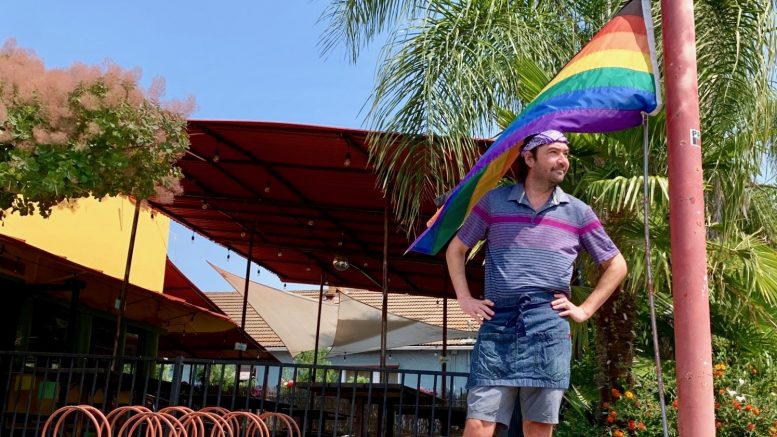
Worker shortages, supply chain chaos, constant rule changes, public fear, bad air and petty criminals – life is never boring for the indie kitchens making the food you love
With dreams of bringing their Pacific Northwest-inspired burger menu to Sacramento, a recent run-in with vandals had the co-owners of Lucky’s Drive-In on the edge of giving up.
As small business owners trying to open a second location in a new city, Willow Eskridge and Michael Feagins recently found their bright-red, English-style, double-decker bus standing guard outside their Franklin Boulevard restaurant covered in black-and-white graffiti.
Add to that the kaleidoscope of everyday restaurant stresses, especially while operating during an ongoing pandemic, and it’s understandable how that moment felt like a gut punch.
“We figured the bus would get some buzz going and get people talking about us — and then, somebody tagged it,” Eskridge said. “It’s something that a lot of people can really relate to. You drive around, and you get so sick of seeing people’s businesses, and even just abandoned places, tagged. It’s just sad.”
While a number of popular Sacramento restaurants closed last year due to various hardships, including the Michelin-recognized Mother and the nearly century-old Espanol Italian, those that remain are steadfastly continuing to weather a number of unique challenges that stem directly from the pandemic.
Instead of planning the day’s menu, many restaurateurs are finding themselves constantly adjusting to a lack of staff, the steep price increases of essential ingredients and the lingering question of whether the day’s product delivery will even show up. These are just a few issues becoming part of the everyday experience of running a modern-day dining house in Sacramento — and that’s even before firing up the burners.
Read the full story here. Published with the Sacramento News & Review September 2, 2021.
The Fruits of Their Labor

Midtown Association splits with Unseen Heroes, a Black-owned events company that operated Midtown Farmers Market for more than 5 years
On any given Saturday morning, rain or shine, the Midtown Farmers Market is filled with as many as 90 vendors selling fresh produce, artisan goods and wares that stretch over two city blocks in the heart of the Lavender District.
But it wasn’t always that way.
Unseen Heroes, an award-winning events and marketing agency in Oak Park, was hired by the Midtown Association to run the day-to-day operations. With that contract, Unseen Heroes says it not only introduced its extensive list of diverse vendors to the market, but also grew its social media presence from 253 followers to more than 31,000 on Instagram. As years passed, the market eventually expanded from one to two blocks to accommodate the growing list of vendors, who sell everything from fruits and veggies, to empanadas and handmade jewelry.
So it was a shock to Unseen Heroes’ co-owner, Roshaun Davis, when he received an email from the Midtown Association’s executive director, Emily Baime Michaels, stating the contract between the two organizations was being terminated as of June 1. Unseen Heroes’ last day operating the market is Saturday, June 27.
“These relationships are ours. We built these relationships, we leveraged our relationships and had people come into the market that would not necessarily have even done business with Midtown [Association],” Davis says. “It was just that bewilderment of like, ‘How are we going to make this work?’ For us, it’s always been community first, so we didn’t want to pull all the vendors away from the market.”
SN&R asked Michaels why Midtown Association made the decision to split from Unseen Heroes during the height of farmers market season. She says it was due to “18 months of performance issues.”
“The majority of the performance issues are ones that they themselves actually document on worksheets that they turn into us every month that talk about the performance of the market,” Michaels says. “Our market manager that works for Unseen Heroes, their responsibility is to fill out how many vendors we have, whether we have all their insurance on file, whether we posted correctly on our social media—all of the pieces that come with running the market, and consistently, those were not being completed.”
Unseen Heroes’ farmers market manager, Hope Rodriguez, says that’s not true. …
Read the full story published JUNE 22, 2020 in the Sacramento News & Review
Burns So Good

I have an affinity for spicy food, though it wasn’t always that way. When I was in kindergarten, my dad shouted from the kitchen, “Mija! Do you want a pickle?” I loved pickles. He knew this. And although this particular pickle looked strange, I bit into it—only to suffer through heat waves and watery eyes that come standard with deep-green jalapeños. Oh, the joys of growing up in a Mexican household.
Now when I see spicy food trending, I seek it out. I enjoy testing my spice-boundaries and swimming in the euphoric feeling triggered by capsaicin (the compound that makes hot peppers hot). Enter Nash & Proper, a Nashville-inspired hot chicken food truck that serves a straightforward menu of crispy-fried chicken thighs, wings and tenders dunked in varying levels of liquid fire.
My first visit was at its location in Oak Park, where N&P parks in front of T&R Taste of Texas BBQ on Wednesday and Thursday afternoons. The spice levels: Mild “a bit of heat,” Medium “now you feel it,” Hot “it’s burning” and Cluckin’ Hot “get the cluck outta here.”
I ordered The Sammich ($12, Medium), a generously layered beast that requires two hands to manage. A soft, buttery bun is grilled until lightly charred before two crunchy boneless thighs are dipped in hot sauce and stacked with vinegary, green cabbage slaw, a few dill pickles and crowned with a top bun accompanied by Fuego Sauce, a mildly spicy aioli. I ensured my first, large bite included a bit of everything.
The textures alone were deliciously satisfying. The pillowy, toasted buns and the crisp cracklings from the chicken’s batter echoed with crunch inside my head, while the thigh meat was both tender and juicy. This tantalizing mouthful was followed by toothsome moments of fresh cabbage slaw and the occasional dill pickle punch. I dove back in for another gargantuan bite.
Luckily, I was dining solo on the trunk of my car, so I had no shame. Between bites, I enjoyed creamy potato salad ($3), cubes of cold potatoes in a dill-forward dressing acted as an excellent cooling method. Still, Medium didn’t quite scratch the surface of spiciness that I craved.
I continued to chase the capsaicin dragon on a follow-up visit, when the truck was at SacYard Community Tap House, with a basket of Cluckin’ Hot wings (three for $10) served on slices of white bread with pickle slices. The wings and drumettes were such a deep red it appeared an ominous warning. Once I popped the drumette from its wing, I took a conservative bite and waited.
Cluckin’ Hot is deceptive. I stopped myself from taking a second bite as the heat began to billow on my palate like a desert storm cloud taking over the entirety of my mouth. The heat builds slowly and digs in to stay awhile. As time passed, I craved more as it burned so good. A deep inhale seemed to make things worse so I tore off a piece of white bread and chewed until the heat slowly cooled.
With beads of sweat beneath my glasses, Cluckin’ Hot took me there. A very hot, but pleasantly slow burn. Would I order The Sammich Cluckin’ Hot? No. That ’wich is meant to be savored. But would I order a basket of wings that hot again? Most definitely. Would you?
Published MAY 9, 2019 in the Sacramento News & Review
Life and Tacos

Whether during the early mornings as he got ready for school, or in the evenings after dinner, Josue Acosta says his dad always had a fresh pot of coffee brewing. Coffee was a comforting aroma throughout his childhood that fueled conversations and relaxed the family.
For Acosta, growing up Salvadoran meant coffee was an anytime beverage. “Its culturally been passed down that after your meal you start smelling coffee,” he says. “That’s been my family since I grew up.”
Inspired by his cultural connection to coffee and an insatiable taste for flavorful tacos, Acosta launched Zoe Coffee and Tacos in January 2018, popping up at weddings, breweries and fundraisers to pair what he says are a match made in culinary heaven.
“One of the biggest memories I have is cooking with my dad. He would explain to us what he was doing and he would always talk about how he learned from his grandma,” Acosta says. “That idea always stuck with me. Him seeing his grandma and me seeing him. I don’t need to know the exact recipe, I just need to observe, see him and remember the flavors.” …
Read the full story, published Oct. 24, 2019, in the Sacramento News & Review.
The Paprika Steeper
Mark Lastuvka came to Sacramento from the Czech Republic, and now rises early to cook goulash at La Trattoria Bohemia

The scent of tonight’s dinner special—tandoori-spiced halibut—wafts from the kitchen. Lively
conversations fill a warmly lit dining room with not an empty seat inside La Trattoria Bohemia, a Czech and Italian restaurant that opened in East Sacramento 17 years ago.
In the center of the merriment sits restaurant owner Mark Lastuvka, enjoying a glass of red wine with his girlfriend. A friendly chef, he’s passionate about the quality of food he serves his customers, whether it’s the Italian handmade ravioli, pizza and lasagna or the Czech dishes of his childhood, including beef goulash, chicken paprikash, handmade späetzle and schnitzel, which he made all the time as a kid. The Czech dumplings are his top-sellers.
Lastuvka’s place is one of a kind—the only Czech restaurant in Sacramento.
“I come every morning and I cook. Today, I did beef goulash and Bavarian goulash and soup,” Lastuvka says. “Goulash takes three hours, so you have to come in the morning and start it because it takes all day to prep. The goulash, I needed to twist it a little bit and make it for here to get people used to it, because it’s different in Czech. But now it sells very well.”
In Lastuvka’s goulash, he says, he uses precise portions of meat and vegetables, whereas in different regions of Eastern Europe, a homemade recipe would incorporate just about anything.
Lastuvka moved here from the Czech Republic in 1990. While taking English classes, he met two men who offered him a job washing dishes at Roma II Pizzeria on Folsom Boulevard. There, he met owner Maria Guerrera and learned the essentials of authentic Southern Italian cuisine over the next decade.
“She’s like my mother,” Lastuvka says. “My mom is back in Czech, so Maria became my friend and mother, and she helped a lot.”
Lastuvka was working two jobs, seven days a week, split between an early morning construction job and Roma’s on the weekends. Understandably, he started to get tired. So he decided to bring a little taste of Czech to Sacramento …
Read The paprika steeper in its entirety here. This article received a 2018 Excellence in Journalism Award with the Society of Professional Journalists, Northern California Chapter. Published in the Sacramento News & Review November 30, 2017.
Culinary Dreams
Community kitchens support local food and drink artisans in
America’s Farm-to-Fork Capital

On a hot Saturday afternoon, ice-cold drinks and root beer floats are served inside the Burly Beverages Gift Shoppe & Tasting Room, an old-fashioned soda fountain located in the Del Paso Heights neighborhood. Rows of specialty sodas, seltzers, and cocktail essentials line the shelves, and co-owner and founder Gabriel Aiello welcomes guests from behind a sleek corner bar lined with black and chrome bar stools. The doorbell rings, and Aiello opens the door for two women so they can taste the variety of small-batch soda flavors Aiello’s seasonal menu features. For Aiello, this brick-and-motor location was once a simple dream. Still, the challenges that keep many small-batch culinary businesses from realizing their dreams are very much a reality.
With more than 11,000 small family farms in the Sacramento Valley, local culinary artisans are able to draw much inspiration from the abundance that surrounds them year round. That vast foundation allows them to create new ways to savor the region’s lush bounty of fruits and vegetables.
Whether they operate a food booth, run a pop-up supper club, or are a small-batch producer, independent culinary business owners share a passion for sourcing homegrown ingredients and highlighting the authenticity derived from their handmade goods. Still, the expense of launching a culinary dream — especially in its beginning stages — proves difficult for many small producers. So they turn to commercial kitchens and rent space as a more cost-effective approach to sharing their handcrafted goods with the masses. Yet with the growing number of culinary artisans in a booming agricultural economy, kitchen space is extremely limited, which often hampers these budding businesses with a farm-to-fork ethos. Nevertheless, the drive for homemade taste and DIY spirit persists. …
READ THE FULL COVER STORY: CULINARY DREAMS. Published in Edible Sacramento’s Fall 2017 Issue.
Cooking with Precision
Local MasterChef Junior competitor adds chemistry to his kitchen experiments
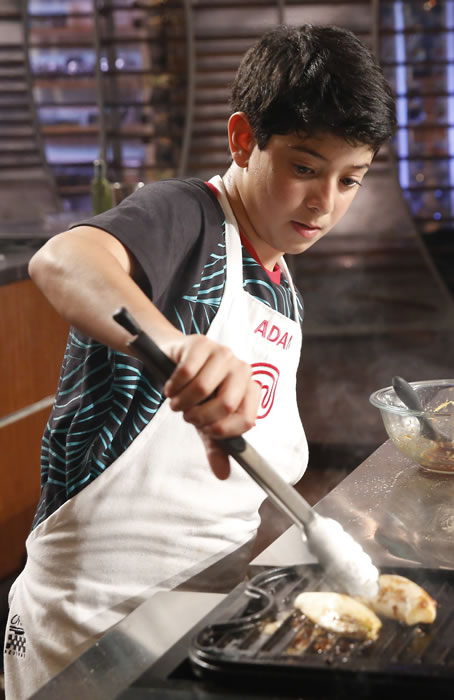
While some youths ask their parents for bats and balls, 14-year-old Adam Wadhwani recalls a time when he asked his mom for a blow torch, CO2 cartridges, and a set of sharp knives.
For most parents, that would be a strange and tall order to fill, but for Wadhwani’s mother, Emel Wadhwani, these gadgets were simply kitchen tools that propelled a then-9-year-old boy’s culinary interests to a level where dishes mirrored restaurant-quality fine dining.
“As a parent, you are sometimes jolted into realizing that your kid does have something special going on, and you need to really support him,” Emel says. “When he got interested in food, it wasn’t just an attempt to create delicious stuff, which he does very well. But he was also interested in the technique and the technology and the equipment that goes with it.”
At the edge of 12 years old, Adam and his mother flew to Los Angeles to try out for the FOX television show MasterChef Junior, hosted by world-renowned chef Gordon Ramsay and award-winning pastry chef Christina Tosi. More than 4,000 young chefs between the ages of 8 and 13 auditioned for the series in order to earn a spot in the Top 40 and the chance to win the $100,000 grand prize.
Adam garnered a place by baking chocolate cupcakes filled with strawberry compote and topped with a buttercream frosting that was infused with smoked cinnamon and nutmeg. His cupcakes not only earned him a signature white apron, but this Sutter Middle School student also received a high five from the famously ill-tempered Ramsay.
“A lot of what compelled me about MasterChef was getting to be around other kids who enjoyed the same thing I did … and with professionals who knew what they were doing and could help guide us to make us better,” Adam says. …
READ THE FULL STORY: COOKING WITH PRECISION. Published in Edible Sacramento’s Fall 2017 Issue.
For the Love of Cheese

For Greater Sacramento’s resident cheesemongers, every cheese tells a story. From its funky flavor profiles to the creameries and farmers who spend decades perfecting their cheese recipes, every detail is essential. Amid an abundance of well-stocked cheese collections throughout the region, edible Sacramento stepped behind the counter to turn to three cheese experts for tips, tricks, and tales. These pros not only carry great respect for cheesemakers, but they also aspire to eliminate the intimidation factor that naturally follows such boundless selections … no matter how you slice it.
A homegrown devotion
Growing up on a small, organic pear farm in Mendocino County, Calif., allowed Rebekah Baker to see the personal connection between produce and its cultivator from a young age. With these experiences at her core, Baker believes the best part about having worked in the cheese industry for the past decade is the variety of narratives that follow every decadent wedge she tastes.
“Behind every incredibly delicious cheese, there is a story. There’s a cheesemaker. There’s a company. There’s a family. There’s a town. There’s a dairy animal that made that milk,” Baker says. “When you taste a really excellent cheese, you know there was someone somewhere along the line who has an intense passion about what they’re doing.”
Baker’s worn many hats within the cheese business, from cheese buyer and specialty associate at Whole Foods Market in Santa Rosa, Folsom, and Roseville, Calif., to Nugget Markets, where she was the corporate director of specialty cheese for three years. Now, she works for Tony’s Fine Foods in West Sacramento as the category manager for cheese. Baker’s dedication to the world of cheese is measured in both years and the countless hours she studied to earn the elite certified cheese professional title from the American Cheese Society.
For Baker, the only wrong way to enjoy cheese is to not eat it. From her experience, tasting cheese is the quickest way to find the one that tickles all the senses. A turning point in her career was when she sampled a five-year-aged Gouda that gave Baker her wow moment.
“It was just the craziest dark, caramel color, and it had these lighter flecks of crystals throughout, and the texture was very firm,” Baker says. “The flavor just blew me away with its burnt caramel, whisky, and cherry notes. When I first tried it, I stopped talking and just tasted for like five minutes. The flavor lingered and kept evolving and changing.” …
READ THE FULL COVER STORY: FOR THE LOVE OF CHEESE. Published in Edible Sacramento’s Summer 2017 Issue.
Eat on the Street
Uncovering Greater Sacramento’s Mexican street food
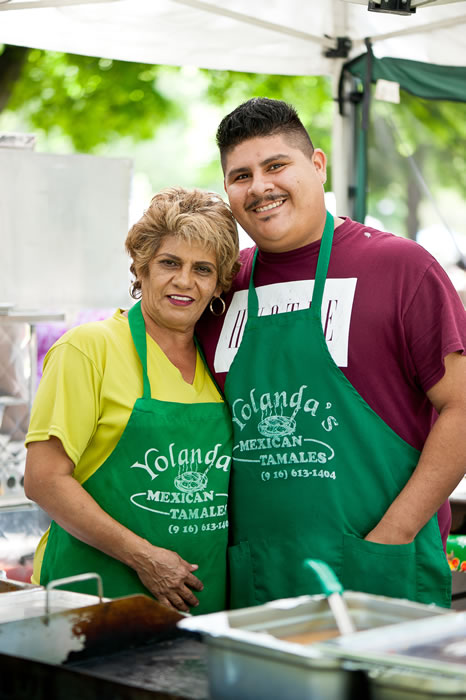
The most authentic flavors of Mexican cuisine are not always tasted in full-spread dishes accompanied by rice and beans or served in a restaurant setting. Instead, the essence of traditional Mexican fare is found streetside, served near parks, in alleyways, and on the busiest corners of the city.
Street food is simple. It’s savory tacos garnished with cilantro and chopped onions and served from a small cart near Southside Park. It’s crunchy chicharrónes, fried pork rinds spiced with lime and chili sauce. It’s the comfort factor present in each bite of an elote, corn on the cob rolled in mayo, chili powder, and Parmesan cheese and enjoyed on a stick.
These curbside treats, with their savory and spicy flavors, originate from some of the oldest regions in Mexico. Street food may be straightforward, but it’s served with a story and spiced with love by people who savor authenticity.

Wrapped in tradition
When Yolanda Yanez was a little girl, her mother taught her the traditions of tamale making in Michoacán. Back in those days, tamales were made by the dozen. Now, Yanez and a small team — which includes her husband, Pedro — prep and steam between 400 and 1,000 tamales in one day.
In her family-run business, Yanez also enlists the help of her sons, Andres and Valente; her daughter, Julia; and Andres’ wife, Sandra, who all are regular faces during every farmers’ market location in the Sacramento area. The markets run from May through October, when Yolanda’s Tamales are sold in bulk.
Tamales start with masa, a corn-based dough that traditionally is made of lard, salt, and baking powder. The masa is spread onto a cornhusk before it’s filled with a variety of meats, chiles, cheeses, or vegetables. Once the tamale is assembled, it’s folded tightly and steamed until the masa is firm. …
READ THE FULL STORY: EAT ON THE STREET. Published in Edible Sacramento’s Summer 2017 Issue.
Wicked Good
Devil May Care Ice Cream owner Jess Milbourn scoops up nostalgia and other delicious childhood treats

Across the I Street Bridge in West Sacramento is Devil May Care Ice Cream, a little red parlor that aims to rekindle a time where a scoop of the frozen confection was the ultimate childhood treat. Inside, ingredients from local companies like the Allspicery and Burly Beverages line the shelves. Canisters of cardamom, cinnamon and vanilla bean pods sit near bottles of root beer, ginger beer and orange soda syrups used as twist on the classic float. Much like the name of his business, owner Jess Milbourn says he approaches his recipes with a fun and reckless attitude because at the end of the day—it’s ice cream. But, don’t diss vanilla. For Milbourn, it’s not only his favorite flavor, but also the most misunderstood.
“It’s such an underrated flavor, but why is it any more plain than chocolate? I put more flavor into my vanilla than my chocolate,” he says. “Vanilla uses two different vanilla beans with some extract, and it just accents everything so well.”
With more than 30 years of experience as a chef and graduate from the Culinary Institute of New York, Milbourn opened the small shop last November and introduced ice cream combinations like coffee and donuts made from Camellia Coffee Roasters and old-fashioned glazed donuts from City Donuts just up the street.
Classic flavors like vanilla and chocolate, cookies and cream, and peanut butter and fudge also make regular appearances on the menu, but his latest creation made with chamomile and kumquat is truly unique. Floral aromas are met with slightly tart pieces of kumquat. The combination tastes of honey, but with a light and sweet finish. A native of West Sac, Milbourn recalls picking chamomile with his grandmother along the river as a child. It’s also where he returns to source the wildflower.
It’s not just a nostalgia trip though, Milbourn says. The greatest feeling he says is seeing his customers smile.
“I get to have kids come in and eat their first ice cream cone and look like that,” To demonstrate, Milbourn shares an Instagram photo of a boy holding a cone with a huge smile on his face.
“It’s the coolest thing. Kids are happy and families come in for celebrations. People come here to celebrate and enjoy life,” he says. “That’s the most soul-satisfying thing is to see happy people, especially the kids.”
Published in the Sacramento News & Review’s “Summer Guide” Issue May 25, 2017.
Filipino Flavor
Olla Swanson cooks up family traditions

Home cooks bring a certain finesse and authenticity to the dishes they know well. In many homes, you’ll find no recipe books sitting on the kitchen counter, no second-guessing of measurements, and often the simmering and spicing of home-cooked meals solely depend on the cook’s palate, which continuously assesses all the familiar flavors lightly bubbling on the stovetop until they’re just right.
All of these methods ring true for Olla Swanson, a seasoned home cook who was taught how to make rice properly by her mother at age 4. Her advice: Wash it three times.
Growing up in a large Filipino household, Swanson inherited the natural ability to cook traditional-style Filipino dishes from her mother, Olivia, and her Aunt Lupe.
“When I was growing up, my mom and my Aunt Lupe between them had eight children, and we all grew up together in this big house, and there would be so much food,” Swanson says. “I like how Filipino food makes me think of community and all of us eating together, especially if there’s a big party. Also, it’s hard to find. The only way you can get it is if you make it.”
Under the moniker The Olla Factory, Swanson now serves the Filipino dishes of her childhood during a rotating Monday popup dinner series at Sacramento’s Old Ironsides restaurant, to crowds she hopes will discover a love for these foods that meant so much to her and her family. …
READ THE FULL STORY: FILIPINO FLAVOR. Published in Edible Sacramento’s “Cooks!” May/June 2017 Issue.
Gardener’s Almanac
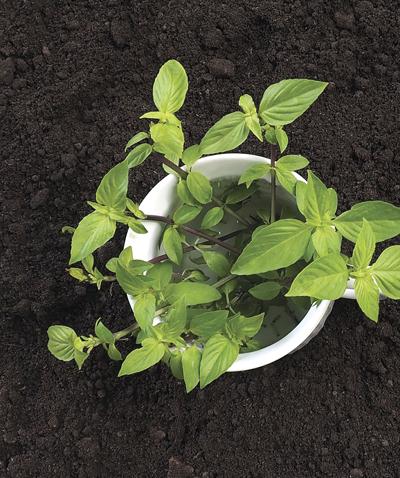
Turning the soil, caring for seedlings and tasting homegrown bounty is what gardening is all about. For Judith Yisrael, growing nutrient-rich food for her family and her surrounding community is an everyday way of life. She is the co-founder of Yisrael Family Urban Farm, a half-acre plot of land in the Oak Park neighborhood where she and her husband, Chanowk, work hard in the soil and in the community. In January, Sacramento County’s board of supervisors unanimously passed the County Urban Agriculture Ordinance, a law that will allow residents to legally grow and sell crops, keep bees and even raise chickens and ducks at home. For the Yisrael family, the news means they will open and operate an urban farm stand selling organic fruits and vegetables to their neighborhood.
“Remember, we’re not just growing food when we’re talking about urban agriculture,” she says. “We’re actually growing community, we’re growing hope and we’re growing health.”
With a passion for growing herbs, vegetables and colorful flowers, Yisrael thinks about how to create biodiversity in her garden by the use of companion planting, which she says is a natural system where the plants and insects take care of themselves. She makes homemade soaps and salves and infuses oils with ingredients from her backyard bounty, and she still found time to help Sacramento Magazine with a month-by-month guide for our readers with a green thumb. …
Read the full story here. Published in Sacramento Magazine April 1, 2017.
Training Ground
The Oak Café preps the new bevy of top chefs

On the culinary television show Top Chef, a recurring challenge for the competing chefs is to group into teams to open a new restaurant with a cohesive theme and vision in just a matter of days. Sacramento’s American River College Culinary Arts and Hospitality Management program does something similar each semester with its four-star restaurant, The Oak Café, except every week the menu is refreshed.
Each week, the new menu of appetizers, entrées, and desserts is made from scratch with locally sourced ingredients from Del Rio Botanical in West Sacramento, Soil Born Farms in Rancho Cordova, and ARC’s horticulture department gardens. The variety of cuisines served at the restaurant includes anything from classic French to Cuban or American Southern food, according to program department chair Brian Knirk.
“One of the most important things that our students learn is attitude and respect for the kitchen and the ingredients,” Knirk says. “But what we also try to instill in them is an understanding of the details required to make food great and the process by which you achieve those outcomes.” …
READ THE FULL STORY: TRAINING GROUND. Published in Edible Sacramento’s “Fresh Start” March/April 2017 Issue.
Sacramento Chefs and Farmers Share Tips on How to Use Every Last Bit of those Summer Vegetables
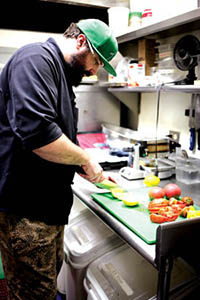
Farmers markets are popular with just about anyone looking for fresh, locally grown produce. So fresh, in fact, that many times the fruits and vegetables displayed in mounds at merchant tents are often picked from the field the previous day. … Even though many farmers market fiends challenge themselves to cook what they bring home each week, too often stems, leaves and rinds end up in the garbage. Chefs and farmers alike, however, say these overlooked pieces have tasty nutritional value. Executive chef Jon Clemons at The Porch Restaurant and Bar says he likes to think about creative ways to use the entire vegetable. He and his staff use a variety of techniques to transform rinds, cobs and even buckets of green tomato odds and ends into delicious fare. …
READ THE FULL STORY: WASTE NOT, ENJOY MORE. Published in the Sacramento News & Review, July 23, 2015.
 Steph Rodriguez